Softude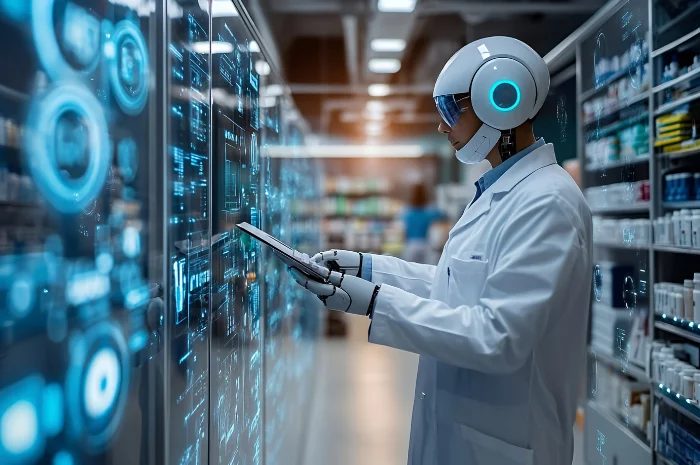
Quick Summary
AI agents can extend existing pharmaceutical supply chain management software without replacing them. By working across these platforms as an intelligence and orchestration layer, agents can bring together data, identify exceptions, and support decisions that currently require manual effort.
That intelligence layer becomes particularly useful where existing systems stop short. When standard software cannot connect multiple platforms, handle a company-specific workflow, or apply business rules across fragmented data, custom AI agent development can bridge those gaps. This allows companies to build on their existing technology while improving automation, visibility, and responsiveness across the supply chain.
Key Highlights
- AI agents can work alongside ERP, WMS, TMS, QMS, and demand-planning systems.
- High-value applications include exception management, inventory, procurement, supplier monitoring, and logistics.
- Custom development is useful when standard software cannot support a specific workflow or integration.
- Agents need defined data access, permissions, auditability, and human oversight.
- A focused, measurable use case is a practical starting point for pharmaceutical supply chain optimization.
What AI Agents Actually Do in a Pharma Supply Chain
AI agents are software programs designed to monitor data, identify conditions that require attention, analyze available information, and take or recommend a defined action. When a decision is sensitive, the workflow can escalate it to a human.
This differs from traditional automation, which generally follows fixed rules based on predictable inputs. AI agents can work across multiple data sources and focus on exceptions that fall outside standard workflows.
In a pharma supply chain, an agent could monitor inventory and flag a potential stockout for a critical SKU, assess whether a shipment delay affects a temperature-sensitive product, or identify supplier-performance patterns that may indicate an emerging disruption.
People still make important decisions, but the agent reduces the time spent gathering information, comparing systems, and determining what requires attention.
Your Existing Pharmaceutical Supply Chain Software Still Matters
Most pharmaceutical organizations already operate a substantial software stack-ERP systems, WMS platforms, TMS platforms, and QMS platforms.
Adding AI agents does not make these systems redundant. They contain the operational data, transaction history, master data, and established workflows that supply-chain teams already depend on. Replacing them simply to introduce AI can create unnecessary disruption and duplicate capabilities that already work.
AI agents can instead provide an orchestration layer around this infrastructure. Through pharma ERP integration and other controlled connections, agents can access relevant information across systems, interpret it in context, and surface situations that require action.
The objective is to make existing pharmaceutical supply chain management software more responsive rather than introduce another standalone application.
Where Custom AI Agent Development Fits
Custom development becomes useful when there is a gap between the information available in existing systems and the action a supply-chain team needs to take.
- Integrating Existing Systems
Important supply-chain information often sits across several applications. A potential stockout may appear in the ERP, while supplier lead times are maintained in procurement software and demand forecasts sit in a planning platform.
A planner may need to compare all three before deciding what to do.
Custom AI agents can connect these sources through APIs and other integration mechanisms. They can work with information that already exists rather than creating another data silo.
The value is not simply connecting systems. It is using connected information to support a specific decision or workflow. Instead of opening several applications and manually comparing information, a planner can receive the relevant context through one workflow.
- Exception Management
Supply-chain teams spend considerable time reviewing exceptions such as low inventory, shipment delays, demand changes, or quality holds.
AI agents can monitor these conditions continuously and apply predefined criteria to determine which exceptions need attention. Rather than generating another generic alert, an agent can provide relevant context and route the issue to the appropriate team.
For pharmaceutical supply chain optimization, this can reduce the time between detecting a problem and getting the information to the person responsible for resolving it.
- Procurement and Supplier Workflows
Supplier performance can change quickly. Lead times may increase, capacity may become constrained, and external disruptions can affect sourcing.
An AI agent can monitor supplier data and identify patterns that warrant attention. When a defined threshold is reached, it can gather relevant information, assess the potential supply impact, prepare a purchase recommendation, and route it to procurement for review.
The procurement team remains responsible for the decision. The agent reduces the research required to make it by bringing together information from inventory, demand, purchase orders, and supplier systems.
- Inventory and Expiry Management
Pharmaceutical inventory cannot be managed purely as a quantity. Product identity, batch, expiry date, location, demand, and handling requirements can all affect the appropriate action.
AI agents can monitor inventory across locations and flag products approaching defined expiry thresholds. They can also identify excess or slow-moving stock and highlight potential redistribution opportunities based on demand and availability.
This creates an opportunity for pharmaceutical supply chain optimization without replacing the underlying inventory system. The agent provides analysis and recommendations while established systems and approval processes continue to control inventory transactions.
- Cold-Chain and Logistics Monitoring
Temperature excursions and logistics delays require timely attention, particularly when products have specific storage and transportation requirements. Existing monitoring platforms can generate alerts, but operations teams still need to determine which events require action.
AI agents can analyze temperature and logistics alerts alongside product, shipment, route, and deviation information. Based on predefined rules, they can prioritize exceptions and route them to the appropriate team.
The purpose is not to eliminate human review. It is to reduce the time teams spend sorting through alerts that do not require the same level of attention.
How AI Agents Work Alongside Existing Systems

A practical architecture can follow this pattern:
Existing Systems (ERP / WMS / TMS / QMS / Demand Planning) → Integration Layer → AI Agent → Workflow & Approval Routing → Action Logged Back to Existing Systems
Each layer has a defined role. Existing systems remain authoritative for operational transactions. The integration layer provides controlled access to relevant information. The AI agent analyzes that information and identifies conditions or prepares recommendations. The workflow layer determines where those recommendations go and whether approval is required.
For example, an agent may be allowed to create a purchase recommendation, while a procurement employee must approve it before the ERP creates the purchase order.
Agents should have explicit limits on what they can access and what actions they can initiate. Workflows involving significant financial, regulatory, quality, or patient-safety considerations should include appropriate human oversight.
Audit logs should capture important recommendations, approvals, and actions so the organization can establish what happened and when.
When Custom Development Makes Sense
The build-versus-buy question should be based on the workflow rather than the technology itself.
Custom AI agent development can make sense when:
- Existing software does not support an important workflow.
- The organization has specialized supply-chain rules.
- Legacy systems need to connect with newer applications.
- Multiple systems need to work together in a sequence that standard functionality cannot support.
- The agent needs to apply organization-specific data or decision criteria.
- Existing vendor capabilities do not provide enough flexibility.
Custom development may not be necessary when:
- An existing platform already provides the required capability.
- The use case does not justify the integration or development effort.
- Existing vendor functionality already addresses the requirement.
The starting point should therefore be the operational problem.
Useful questions include:
- How much planner time is spent investigating exceptions?
- How long does it take to identify a potential shortage?
- How many logistics alerts require manual review?
- How much inventory is exposed to expiry?
- Where do teams repeatedly move information between systems manually?
These measurements provide a clearer basis for deciding whether a custom AI workflow can deliver meaningful value.
Pharma-Specific Controls and Risks
AI agents operate in an environment where data integrity, security, traceability, and validation already matter. Those requirements need to be considered during architecture and development, not added immediately before deployment.
Agents should have access only to the information required for their assigned tasks. Organizations also need to address underlying data quality. Inaccurate inventory records, inconsistent master data, or incomplete supplier information can undermine agent recommendations.
Validation should be considered according to the software’s intended use and associated risk. Regulatory, quality, IT, and operational teams should be involved early, particularly when an AI workflow interacts with regulated processes.
Error handling also needs to be explicit. If an agent encounters incomplete or contradictory information, it should have a defined fallback. Escalating the issue to a human may be more appropriate than generating a recommendation from unreliable data.
Autonomous actions should also be limited. Agents should not receive unrestricted authority to create purchase orders, approve quality exceptions, or execute other consequential decisions. Their permissions should match the risk of the workflow and the controls surrounding it.
Implementation Roadmap
A focused pilot is a practical starting point for organizations evaluating AI agents in their supply chains.
1. Identify a specific problem
Choose a defined workflow with a measurable limitation rather than a broad goal such as “improve visibility.”
2. Map the existing systems
Identify the data required, where it resides, and how it can be accessed securely.
3. Select one AI-agent workflow
Start with a focused use case such as inventory-risk monitoring, supplier exception management, or logistics alerts.
4. Define permissions
Establish what the agent can read, what it can recommend, what it can initiate, and which actions require human approval.
5. Pilot under supervision
Run the workflow in a controlled environment and review recommendations before actions are executed.
6. Measure and expand
Track outcomes such as exception-resolution time, planner workload, investigation time, or stockout exposure. Use those results to decide which additional workflows justify development.
Conclusion
AI agents can extend pharmaceutical supply chain management software without requiring organizations to replace the systems they already rely on. Their strongest role is connecting data, identifying exceptions, and supporting workflows that currently require substantial manual effort.
Custom AI agent development makes sense when existing platforms cannot handle a specific workflow or integration requirement. Starting with one measurable use case, defined permissions, and appropriate oversight provides a practical path toward broader pharmaceutical supply chain optimization.
Softude develops custom AI agents for pharmaceutical and life sciences companies, helping teams define use cases, integrate existing systems, and build AI workflows for regulated environments. If you are evaluating where AI agents fit in your supply chain, get in touch to discuss your specific requirements.
Frequently Asked Questions
No. AI agents can work alongside ERP systems, which continue to manage core transactions and serve as systems of record. An agent can use ERP data to identify risks or prepare recommendations while approved transactions continue through existing workflows.
Common use cases include inventory monitoring, expiry management, procurement, supplier-risk monitoring, demand exceptions, shipment tracking, and cold-chain alert prioritization.
They can continuously monitor supply-chain data, identify exceptions earlier, bring information from multiple systems together, and route recommendations to the appropriate employees. This can reduce manual investigation and improve response times without replacing core software.
Not every decision should be autonomous. The appropriate level of autonomy depends on the workflow, risk, permissions, and governance requirements. Actions involving significant financial, quality, regulatory, or patient-safety consequences should have appropriate controls and human oversight.