Softude
AI transforms pharma inventory management from a reactive tracking task into an automated, predictive system. Unlike generic retail platforms, purpose-built pharma AI forecasts demand at the individual batch level, automates stock rotation by exact expiration date, protects cold chain integrity, and flags drug shortages before they disrupt patient care.
What Is Pharma Inventory Management Software, and How Does AI Change It?
Pharma inventory management software serves as the regulatory system of record for medicine stock. It tracks exactly how much product exists, where it is stored, its specific batch/lot numbers, expiration dates, and mandatory storage conditions. This network typically connects manufacturing plants, regional distribution centers, and downstream wholesalers or pharmacies.
Traditional software is historical and reactive. It simply records past transactions and relies on rigid, manually entered reorder points.
AI shifts this infrastructure into a predictive decision layer. By continuously ingesting real-time sales data, shipment metrics, and environmental sensor logs, AI dynamically updates demand forecasts, automates stock rotation, and generates proactive replenishment tasks.
Why Generic Retail AI Fails in Pharma Inventory

Most commercial AI inventory tools are engineered for retail, where items under a specific SKU are completely interchangeable. Pharma logistics cannot operate on SKU-level logic due to two critical constraints:
Batch-Level Expiry: Two pallets of the exact same drug SKU can have expiration dates months apart. Retail AI treats them as identical units. This error causes the system to ship newer stock first while the older batch sits on the shelf and expires.
QA Release Status: A manufactured batch cannot be shipped, transferred, or calculated as available inventory until it formally clears Quality Assurance (QA) disposition. Retail AI optimizes purely for stock volume and service levels. As a result, it frequently recommends illegal or non-compliant stock movements that violate regulatory holding protocols.
AI-enabled pharma inventory management software must treat batch-level expiration and QA release status as core data constraints, not an afterthought.
What Are the Main AI Use Cases in Pharma Inventory Management?
AI can be applied to several inventory and supply-chain problems. The most useful starting points are usually areas where the business already has a measurable problem, such as forecast error, excess inventory, expiry losses, stockouts, or planner workload.
- Dynamic Demand Forecasting
Pharma demand can change because of factors that historical sales alone cannot fully explain.
Prescribing patterns, formulary changes, product launches, competitor shortages, seasonality, and regional events can all influence demand.
How Does AI Forecast Pharma Demand?
AI-based demand forecasting can combine historical sales with seasonality, prescribing trends, and market signals reflecting what’s actually shifting in the market rather than just what happened last quarter.
- Eliminating Expiry Waste via Automated FEFO
Expired stock is one of the more painful and avoidable costs in pharma supply chain, because it’s rarely caused by a single bad decision. It accumulates from dozens of small ones, like a planner defaulting to a round-number reorder quantity instead of checking exactly how much shelf life a batch has left.
How Does AI Reduce Drug Expiry Waste?
AI-driven systems close that gap by applying first-expiry-first-out logic automatically: batches nearing expiry get routed to the fastest-moving channels first, while reorder quantities for slower-moving products shrink as those products approach their own expiry window.
The effect compounds over time, since less new stock is competing on the shelf with product that needs to move now.
- Real-Time Cold Chain & Temperature Excursion Prevention
The pharmaceutical supply chain suffers an estimated $35 billion annual loss due to product spoilage caused by improper temperature control during transit and storage. Temperature-sensitive biologics and vaccines turn cold chain logistics into a direct inventory availability risk.
How Does AI Manage Cold Chain Inventory?
AI can work with IoT sensors installed in warehouses, vehicles, and shipping containers to analyse temperature patterns and identify abnormal conditions.
A typical workflow could look like this:
- Sensors continuously capture temperature data.
- The system identifies an unusual pattern.
- Analytics assess whether the conditions indicate a developing excursion.
- The logistics team receives an alert.
- The shipment can be rerouted or moved into suitable storage where possible.
The objective is to give teams more time to act before a temperature-sensitive batch becomes unusable.
4. Multi-Echelon Inventory Optimization
Most inventory optimization historically happens one warehouse at a time, which solves a local problem while sometimes making the bigger picture worse.
AI makes it possible to treat manufacturing sites, regional distribution centers, and downstream pharmacies as one connected network and balance stock across all of them simultaneously.
That kind of pharmaceutical supply chain optimization is what keeps a small shift in patient-level demand from turning into an oversized inventory swing several steps back up the chain.
- Predicting Active Pharmaceutical Ingredient (API) & Drug Shortages
Supply shortages often begin upstream.
Raw-material delays, API availability, supplier disruptions, manufacturing problems, transportation issues, and unexpected demand can eventually appear as shortages downstream.
AI can analyse these signals together to identify patterns that may indicate an emerging supply risk.
For procurement and supply-chain teams, earlier visibility can create time to:
- Evaluate alternative suppliers
- Adjust production priorities
- Reallocate available inventory
- Increase safety stock for critical products
- Protect supply to specific markets
The industry is placing increasing investment behind these applications. A 2026 LogiPharma survey found that 96% of pharmaceutical supply-chain professionals ranked AI and machine learning among their top investment priorities. Demand planning and forecasting, inventory optimisation, and logistics orchestration were among the leading application areas.
The same research also identified regulatory and compliance concerns as a major barrier to wider AI adoption, which makes governance and implementation design as important as the AI model itself.
Software Comparison: Standard Inventory vs. Purpose-Built AI
| Operational Factor | Standard Pharma Software | Purpose-Built Pharma AI |
| Data Model Architecture | SKU-level tracking | Batch/lot-level tracking with explicit expiry and QA release logic |
| Replenishment Logic | Static, manual reorder points | Predictive, continuous threshold adjustments |
| Regulatory Compliance | Basic data record-keeping | Validated, audit-ready decision algorithms |
| Cold Chain Management | Logged as separate telemetry data | Factored directly into real-time stock availability |
| Enterprise Integration | Standalone or siloed data | Deep, native connections with ERP, WMS, and QMS |
For companies that need capabilities beyond what their existing inventory software offers, a custom AI layer can be a more practical option.
At Softude, we build domain-specific forecasting and inventory AI tools around existing business data and workflows. For one manufacturing client with 100+ warehouses, our AI-enabled inventory optimization solution reduced inventory holding costs from $25 million to $9 million, cut stock-requirement errors by up to 50%, and delivered 28% savings on new spare-parts purchases.
What Data and Compliance Does AI Inventory Management Require?
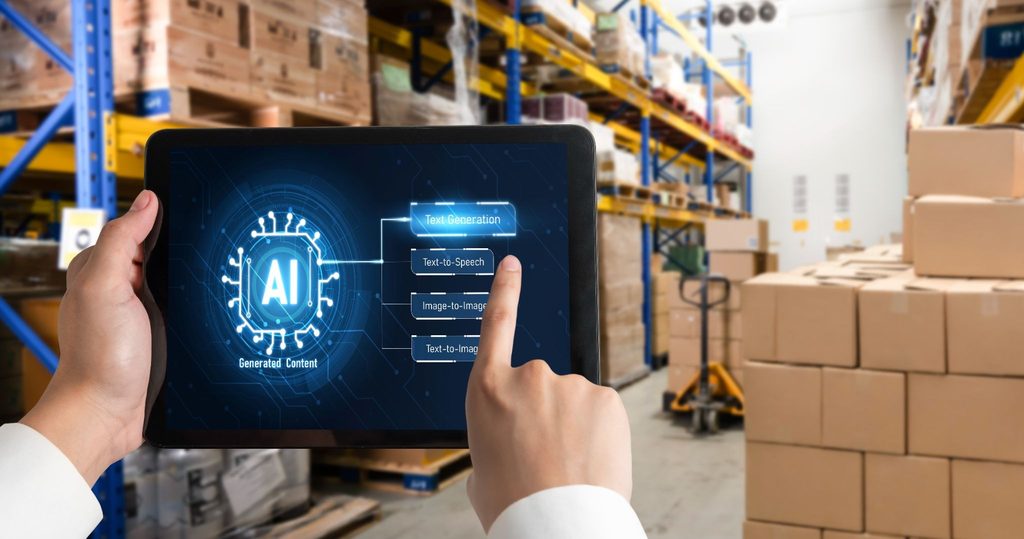
AI inventory projects depend on more than the model. The underlying data, integrations, validation approach, and governance determine whether the technology can be used reliably in a regulated environment.
- The Data Foundation: AI algorithms require unified data streams. Success depends on connecting transaction histories from your ERP, inventory movements from your WMS, and quality records from your QMS into a single data layer.
- GxP Computer System Validation: Because AI software directly influences batch routing and availability, the model must comply with GxP computer system validation protocols. Because AI models evolve, this validation framework must remain continuously audit-ready under ALCOA Plus constraints.
- The Human Checkpoint: AI accelerates decision-making but does not replace human regulatory responsibility. Workflow-embedded AI copilots in planning spaces typically lower manual planning workloads by 20% to 30%. However, while the system suggests batch reallocations or holds, a certified QA professional must execute the final digital signature.
Conclusion
AI can make pharma inventory management more predictive, but the value comes from solving specific inventory problems rather than adding an AI layer for its own sake.
For pharma companies evaluating AI inventory management, a practical starting point is to identify one high-cost inventory problem, establish its current baseline, connect the relevant data, and measure the result. Once the business case is proven, the same architecture can be extended to other parts of the supply network.
If your existing pharma inventory software cannot address a specific forecasting, replenishment, or inventory optimization challenge, we can build a custom AI layer to extend its capabilities without replacing the entire system.
Frequently Asked Questions
An AI-enabled ERP manages predictive intelligence across your entire enterprise, including finance, HR, procurement, and manufacturing. Pharma inventory management software is a specialized tool focused explicitly on stock levels, batch traceability, and cold chain variables. It typically operates as a dedicated module integrated directly into the broader ERP.
No. AI software supports compliance by anchoring inventory decisions to QA release status and creating clean audit trails. However, it does not replace specialized serialization software built specifically to comply with Drug Supply Chain Security Act (DSCSA) electronic tracking mandates.
Return timelines depend heavily on the specific use case:
1 to 3 Months: Cold chain IoT monitoring and automated replenishment show immediate financial returns by preventing batch spoilage and stockouts.
6 to 9 Months: Advanced network demand forecasting and multi-site inventory optimization require several demand cycles to train the model before delivering trusted planning outcomes.
Yes, and this is one of the more operationally mature use cases. AI systems can trigger purchase orders the moment stock crosses a threshold, but unlike a traditional reorder point, that threshold isn’t fixed. It moves as demand patterns shift, as lead times lengthen or shorten, or as a supplier’s reliability changes, so the system is reordering against current reality instead of an assumption set months ago.
Yes, AI can predict drug shortages by scanning upstream supply chain anomalies such as raw material delays at supplier facilities, manufacturing batch deviations, or sudden spikes in regional patient demand.