Softude
Deviation triage is the classification, routing, and prioritization work that happens before an investigation even starts. AI agents can support this through better deviation reporting checks, deviation tracking and alerts, and CAPA and deviation management precedent retrieval. They cannot classify final severity, approve a CAPA, or sign off an investigation. Every triage decision an AI agent supports still needs a qualified person to confirm it.
Key takeaways
- Triage is a distinct step from investigation. It answers “how urgent is this, and who should own it,” not “why did this happen.”
- AI agents work best as a decision-support layer connected to existing QMS data, not as a replacement for the QMS.
- Deviation tracking and alerts is the highest-value automation, since it’s pattern matching against historical deviations rather than decision-making.
- Human sign-off remains required at every stage where a regulatory or quality decision is made.
Quality teams in pharmaceutical and life sciences manufacturing carry a specific, persistent burden. Every time something goes wrong on the production floor, or even slightly off-spec, it has to be documented, investigated, and resolved through a formal process.
That process is deviation management, and the first step inside it is triage. Good deviation reporting and good triage go hand in hand. One depends on the other.
What Is Deviation Triage, and Why Is It Hard to Do Consistently at Scale?
Deviation triage is the process of classifying a newly reported deviation by severity, routing it to the right investigator or team, and prioritizing it against the existing backlog. It happens before root cause analysis begins.
In a small facility handling a handful of batches a week, triage is manageable by memory and judgment. In a large-scale manufacturing operation running dozens of active product lines, the volume of open deviations at any given time can run into the hundreds.
At that scale, triage breaks down in predictable ways, and so does deviation reporting quality.
- Severity calls vary by reviewer. Two investigators looking at similar deviations can classify them at different severity levels, because the classification depends on who happens to remember a similar past incident.
- Routing is slow. A deviation sits unassigned longer than it should because no one has connected it yet to the equipment history, product line, or prior incident that would make the right owner obvious.
- Prioritization is reactive. Without a structured view of the backlog, urgent deviations compete for attention with routine ones, and the loudest issue gets attention rather than the most consequential one.
- Recurring patterns go unseen. A deviation type that has appeared three times in the past quarter, each time on the same line, gets triaged as three unrelated minor events instead of one recurring signal that deserves escalation. This is exactly the gap that deviation tracking and alerts is built to close.
These aren’t investigation problems. They’re triage problems, and they compound before an investigation even opens.
Where Do AI Agents Actually Fit Inside an Existing QMS?
AI agents can sit on top of an existing QMS and connect to the records and workflows needed for deviation triage. They do not need to replace the QMS or become a second system for managing quality records.
For a deviation, the agent can access the information it is authorized to use, such as:
- the deviation description and metadata in the QMS
- related SOPs and work instructions
- previous deviations and CAPAs
- batch or manufacturing records
- equipment or laboratory records, where connected and permitted
- investigation history and other approved quality documents
It can then perform specific tasks around the deviation, such as:
- Extract key facts from the deviation record.
- Classify or prioritise the case for review based on predefined rules and available evidence.
- Find similar historical deviations and related CAPAs.
- Retrieve relevant procedures and controlled documents.
- Identify missing information that may be needed for triage.
- Prepare a triage summary or recommendation for the quality team.
- Route or trigger the next workflow step where the rules and system permissions allow it.
The QMS still controls the official deviation record, workflow status, approvals, audit trail, and controlled quality decisions. The AI agent should not independently approve a deviation, determine final product impact, approve a CAPA, or close an investigation simply because it can generate a recommendation.
What Can AI Agents Automate in CAPA and Deviation Management?
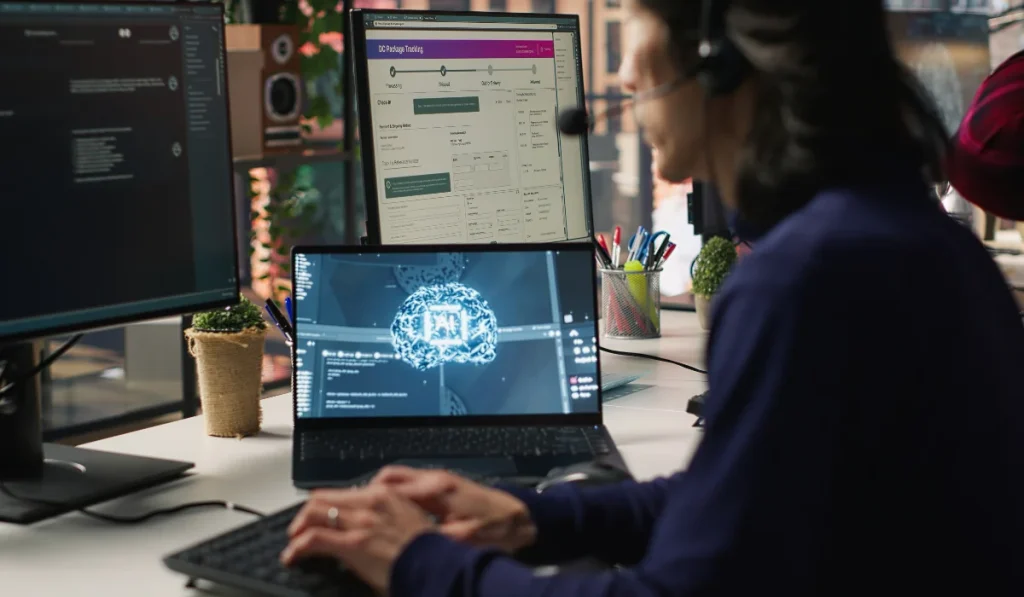
AI agents can support eight specific parts of deviation reporting, deviation tracking and alerts, and CAPA and deviation management, covered below.
1. Severity and risk signal flagging
An AI agent can evaluate a newly reported deviation against historical data and surface signals relevant to severity.
This includes whether similar deviations were previously classified as major, whether the affected batch or equipment has an open CAPA, and whether the deviation touches a product line with a recent pattern of related incidents.
This is not a final severity classification. It’s a structured set of signals that gives the reviewer more to work with before they make the call.
2. Routing support
Based on equipment ID, product line, shift, and deviation type, an AI agent can suggest which team or investigator has handled comparable deviations before, and surface any relevant SOPs or prior investigation records tied to that combination.
This shortens the time between a deviation being logged and someone qualified picking it up, which improves deviation reporting turnaround across the board.
3. Backlog prioritization signals
Across the full open deviation queue, an AI agent can surface which items share characteristics with deviations that historically escalated, which have been open longest relative to their apparent severity, and which are tied to equipment or processes with active open CAPAs.
This gives quality leadership a structured view of the backlog instead of a flat list sorted by date opened, which is a core piece of effective CAPA and deviation management.
4. Deviation tracking and alerts
In a manual environment, connecting a new deviation to a prior incident from three months ago requires someone to remember it, or have time to search for it. Neither is reliable at scale.
An AI agent connected to deviation data can monitor incoming reports in real time and surface connections that manual review would likely miss, such as similar batch conditions, the same equipment ID, or the same shift pattern.
When a new deviation comes in, deviation tracking and alerts can flag that similar incidents occurred in the past, what they were classified as, and whether the resulting CAPA has been verified as effective.
This kind of deviation tracking and alerts doesn’t change how the investigation is conducted. It changes how informed the investigator is when they start.
5. Deviation reporting quality checks
High-quality deviation reporting is foundational to effective deviation management. An AI agent can evaluate the completeness and consistency of a deviation report before it progresses through the approval workflow.
This includes checking whether required fields are populated, whether the narrative includes a clear description of the event and its immediate scope, whether a risk assessment is present, and whether the proposed root cause is supported by the information provided.
Over time, it helps quality teams build more consistent deviation reporting practices, which matters both for audit readiness and for the reliability of the historical data future triage will draw on.
6. Root cause hypothesis support
Root cause analysis is demanding and one of the most commonly scrutinized parts of any investigation. “Human error” is a common root cause classification, but when it’s used without further analysis, it can mask a procedural or equipment issue underneath.
AI agents can analyze historical deviation data to surface probable causal patterns from comparable, previously closed investigations. This gives the investigator a structured starting point, not a conclusion.
This is particularly valuable for less experienced investigators or for novel deviation types where institutional knowledge may be thin.
7. CAPA precedent retrieval
A corrective action addresses the immediate problem. A preventive action addresses the underlying condition that allowed it to occur.
Defining effective CAPAs is difficult, partly because the best reference point is often what has, or hasn’t, worked in the past. This is where CAPA and deviation management data becomes an asset instead of an archive.
An AI agent can retrieve prior CAPA outcomes for comparable deviation types, showing which actions were associated with resolution and which weren’t, and draft a preliminary CAPA framework for the team to evaluate, modify, and approve.
The team retains full accountability for the final CAPA. The agent reduces the time it takes to get to a well-informed starting point.
8. Anomaly detection across deviation data
Beyond individual deviations, AI can analyze aggregate data to identify patterns that shouldn’t be there.
Examples include a sudden increase in deviations linked to one production line, an unusually high rate of “human error” attributions from a specific shift, or a cluster of rapid CAPA closures without documented effectiveness verification.
These signals don’t necessarily indicate a problem, but they warrant review. An AI agent that surfaces them as part of regular deviation reporting gives quality leadership a structured view of systemic risk that would otherwise require manual trend analysis to produce.
Deviation Triage: What Stays Manual vs. What AI Can Support
| Triage task | Manual today | Where AI agents help |
| Reading the deviation report | Investigator reads and interprets | AI checks completeness and flags missing fields |
| Checking for related past deviations | Relies on investigator memory or manual search | Deviation tracking and alerts surfaces matches by equipment, batch, shift, or product line |
| Assigning severity | Investigator judgment call | AI surfaces historical severity precedent as input, human assigns final rating |
| Routing to an owner | Based on availability or habit | AI suggests owner based on comparable past deviations |
| Prioritizing the backlog | Sorted by date or by whoever escalates loudest | AI surfaces backlog items with escalation-pattern signals |
| Final classification and sign-off | Quality reviewer | Stays fully human, no exceptions |
What Agents Should Not Do in Deviation Management?

The operational benefits above are real, but there are parts of deviation triage and management where automation introduces more risk than it removes.
- Investigation sign-off remains a human function. An AI agent can support the investigation. It cannot replace the qualified person who reviews the evidence, assesses the risk, and takes responsibility for the conclusion.
- Final severity classification cannot be delegated. AI can surface signals and precedent. The person assigning the final severity level is accountable for that call, and that accountability doesn’t transfer to a system.
- Root cause determination cannot be delegated to an algorithm. AI can surface hypotheses based on historical patterns. Confirming the root cause requires on-site evidence, such as equipment inspection, document review, and staff interviews, that only a trained investigator can conduct and interpret.
- CAPA approval is a quality decision, not a data output. A CAPA recommended by an AI system is a starting point for review. The quality team determines whether it’s appropriate, complete, and proportionate to the risk. This distinction is the backbone of responsible CAPA and deviation management.
- Regulatory traceability must remain clear. Any AI layer introduced into a triage or deviation management workflow needs to be validated as part of the computerized systems it touches.
Its recommendations need to be traceable, and the human decisions that act on those recommendations need to be documented. This is the same lifecycle validation, access control, and audit trail discipline regulated manufacturers already apply to their QMS, extended to cover the AI layer itself.
What Should Quality Leaders Confirm Before Implementing AI Agents for Deviation Management?
Before deploying an AI agent, quality leaders should define its intended use, data access, performance requirements, and human oversight. Four questions matter most.
What data will the agent use?
Define which QMS records, SOPs, CAPAs, batch records, and other approved sources the agent can access. Check whether the data is complete, consistent, current, and properly controlled. Poorly structured or fragmented historical data can limit the reliability of AI recommendations.
What exactly is the agent allowed to do?
Define the agent’s context of use before implementation. Retrieving similar deviations, summarising records, recommending a triage category, and triggering a workflow carry different levels of risk.
The intended use should specify what the agent can do, what outputs it produces, and which actions remain outside its authority.
How will its performance and outputs be controlled?
Test the agent against representative deviation scenarios, including incomplete or ambiguous cases. Establish acceptance criteria and document how performance will be assessed and monitored over time.
The level of assurance should reflect the risk and intended use of the AI function rather than treating every AI capability the same way.
Where does human review remain mandatory?
Define human checkpoints within the workflow. The agent can surface evidence, identify similar cases, or recommend an initial classification, but qualified personnel should review outputs and make decisions that require quality judgment or formal approval.
Users also need training on both the agent’s capabilities and its limitations so they know when to accept, challenge, or escalate an AI recommendation.
Conclusion
AI can make deviation triage more efficient, but the value comes from how deliberately it is introduced into the quality process.
Before deployment, identify one specific triage task, map the data and systems it depends on, define the quality risks, and set clear human review points. Then test the agent against real-world deviation scenarios before expanding its role.
For quality teams, the practical next step is simple: choose one controlled triage workflow, establish measurable acceptance criteria, and determine whether AI can improve it without compromising quality oversight.
Softude builds this kind of AI agent layer for quality teams, connecting to existing QMS data, defining what the agent can access and act on, and keeping qualified humans accountable at every decision point.
Frequently Asked Questions
No. It can surface historical precedent and risk signals relevant to severity, but the final classification stays with a qualified reviewer.
No. Every triage decision an AI agent informs still requires human review and sign-off before it moves the deviation forward.
Deviation tracking and alerts is one input into triage. It surfaces related historical incidents and patterns. Triage is the broader decision of severity, routing, and priority that a human makes using those signals.
No. Closing a deviation and approving a CAPA are quality decisions that stay fully human. The agent’s role stops at surfacing information and drafting starting points.