Softude
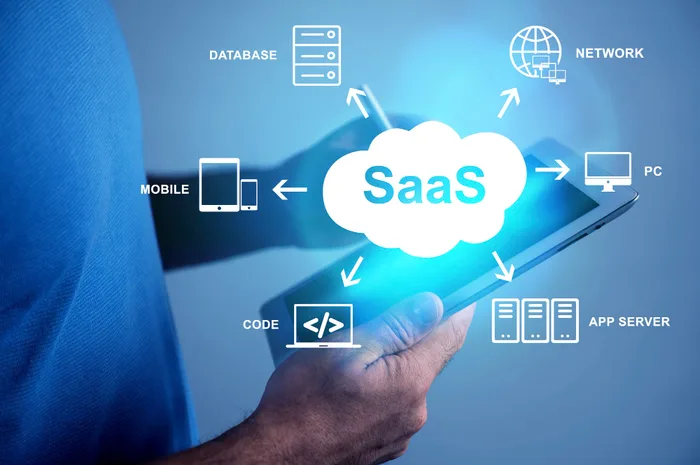
As global businesses keep a close eye on costs, SaaS is still the way most of them buy software. Nobody wants to run servers, and nobody wants a three-year implementation. But the SaaS model itself is changing faster than it has in a decade.
In 2027, three things are true at once. AI agents are doing work inside SaaS products that users used to do themselves. Buyers are paying for outcomes and usage rather than seats, because fewer people need a login when an agent does the clicking. And regulators in the EU, India and the Gulf are deciding where customer data can live, which changes how a SaaS product has to be built.
That mix creates new opportunities and kills some old ones. In this blog we will look at the forces behind the shift, the five trends SaaS businesses need to follow in 2027, and where the future of SaaS is heading.
Factors Influencing SaaS Trends in 2027
Change doesn’t just happen suddenly; it comes from small, repeated shifts over time that eventually lead to a big change. For the SaaS industry, the factors responsible for this shift are:
1. Change in Customer Preferences
Both B2C and B2B customers use SaaS solutions, and their shared priorities have not changed much: personalization, affordability, data security, and a smooth user experience. What has changed is the expectation that the product does the work. A customer in 2027 does not want a dashboard that shows them a problem; they want the product to fix it, or at least to draft the fix and ask for approval. Products that still expect the user to do every step feel old.
Read More: AI-Powered Retail: How Technology is Reshaping the Customer Experience
2. Growing Market Competition
The SaaS market is still a tough battleground because of giants like Salesforce, Microsoft, Google, SAP, and Oracle, and all of them now ship AI agents inside their platforms. That squeezes horizontal SaaS from above. At the same time, AI has made it cheaper to build a credible product, so the number of new entrants in every niche has gone up. The space that is left for a new or mid-size SaaS company is narrow and specific: an industry, a workflow, or a data advantage the giants do not have. Analyzing the ground reality of one market, and building for it, matters more than ever.
3. Advancements in Technology
Generative AI was the eye-grabber in 2024. In 2027 the shift is to agents: software that plans, takes actions across systems and reports back. That changes product design (the interface is often a conversation or an approval queue, not a form), it changes architecture (products need APIs that agents can call, not just screens humans can click), and it changes the release process. DevSecOps practices are now the baseline for shipping these changes quickly and safely.
4. Dynamic Regulation and Compliance
Selling SaaS is harder in 2027 because of three overlapping rules. The EU AI Act is in force, with obligations for AI features depending on their risk level. Data residency laws in the EU, India and the Gulf increasingly require customer data to stay in region. And US enterprise buyers ask for SOC 2 Type II as a condition of the first conversation. Companies that treat compliance as part of the product, not a document for the sales team, close faster.
5 Trends SaaS Businesses Must Follow in 2027

1. Agentic SaaS
The biggest shift in the industry. SaaS products are moving from tools that help a person do a task to agents that do the task and ask for approval. Customer support platforms resolve tickets; finance tools reconcile accounts; sales tools research and draft outreach. Salesforce’s Agentforce, Microsoft’s Copilot agents and a long tail of specialist vendors are already there.
For a SaaS company this means two things. The product needs an agent layer, built on your own data and workflows, and it needs the controls that make an agent safe to use: audit logs, approval steps, limits on what it can change. Our guide to integrating AI agents with an existing tech stack covers the engineering side.
2. Outcome and Usage-Based Pricing
Per-seat pricing is under pressure for a simple reason: when an agent does the work, fewer people need a seat. Buyers have noticed, and they are pushing back on paying for logins nobody uses. The response is pricing tied to usage (conversations handled, documents processed, API calls) or to outcomes (tickets resolved, invoices collected).
This is not a billing change; it is a product change. You need metering built into the product, cost visibility per customer, and a clear story for what the customer gets per dollar. SaaS companies that make this shift early set the price expectations in their category.
3. Vertical AI SaaS
Vertical SaaS will never lose its value in the industry, and in 2027 it has a new engine. An AI model trained on one industry’s documents, workflows and vocabulary beats a general-purpose tool every time, and the data to train it is something the giants do not have. Healthcare, logistics, legal, construction and manufacturing are all seeing vertical AI products win against horizontal platforms.
So, instead of developing a product that works across all industries, create products that solve industry-specific challenges and learn from industry-specific data. You deliver more value, and you build a moat the giants cannot copy from the outside.
Read More: A SaaS Application for 100% Visibility of Cargo Shipments in Real-Time
4. Embedded Payments and Embedded Finance
Embedded payments have moved from a trend to an expectation. Buyers do not want to leave the product to pay, and SaaS companies have learned that payment revenue can be larger than subscription revenue. The next step is embedded finance more broadly: invoicing, lending, insurance and payouts offered inside the product through partners such as Stripe, Adyen or regional providers.
For a vertical SaaS product in particular, owning the money flow is often what turns a useful tool into the system of record for the business.
5. Consolidation and Composable Stacks
Enterprises in 2027 are cutting the number of SaaS tools they pay for. Finance teams count overlapping subscriptions, and anything that does one small thing is at risk. The products that survive consolidation do one of two things: they become a platform that others plug into, or they become a component that plugs cleanly into platforms, with open APIs, webhooks and connectors for the systems the customer already runs.
Either way, integration is now a product feature, not an afterthought. Our IT integration strategy guide explains how to design for it.
The Future of SaaS: Where the Industry Is Heading

The SaaS delivery model is not going anywhere. Software in the cloud, paid as a subscription, is still how businesses want to buy. What is changing is the unit of value. For fifteen years it was the seat. In 2027 it is the task: the ticket resolved, the invoice collected, the document processed. Products that can count tasks and price them will grow; products that can only count logins will shrink.
The market is also splitting. At one end are platforms with agent ecosystems, where customers buy a core product and the agents that run on it. At the other end are vertical specialists that know one industry better than any platform can. The middle, horizontal tools that do one general thing well, is being squeezed from both sides.
Monetization follows. The move to usage and outcome pricing is early, which means the companies that instrument usage now will set the pricing norms their competitors have to match later. Analyst forecasts still show the SaaS market growing at double-digit rates through the decade, driven by AI features rather than new seats.
What This Means If You Are Building a SaaS Product
If you are planning or rebuilding a SaaS product in 2027, these trends set the checklist:
- Architecture: Cloud-native and multi-tenant from day one, with an API layer that agents and partners can call. Our cloud-native development practices cover the fundamentals.
- Data: A data model that can train or ground an AI feature later, and a residency plan for the regions you sell into.
- Metering: Usage tracking built into the product, so you can price by usage or outcome when the market asks for it.
- Scope: A first version that proves one workflow for one industry. Our guide on what determines MVP development cost and the follow-up on scaling an MVP into a full SaaS product lay out the path.
- Security: SOC 2 and the compliance posture for your industry planned before launch, not after the first enterprise deal stalls.
Softude builds SaaS products for US and global clients through our digital product engineering team, from first version to multi-tenant platform. The cargo visibility SaaS linked above is one example of a vertical product built this way.
Frequently Asked Questions
Is SaaS dying because of AI?
No, but per-seat SaaS is shrinking. The delivery model (software in the cloud, paid as a subscription) is as strong as ever. What is changing is what the software does and how it is priced. Products that add an agent layer and move toward usage or outcome pricing are growing; products that are a form on top of a database are being replaced by agents that fill the form.
Is the SaaS industry still growing?
Yes, but differently. Spending on SaaS keeps rising because AI features are being bought as subscriptions, while seat counts in traditional categories are flat or falling. Growth is concentrating in vertical products and in platforms that ship agents; horizontal tools without an AI layer are the ones losing share.
What is agentic SaaS?
Software that performs tasks on the user’s behalf instead of giving the user tools to do them. An agentic support product reads the ticket, checks the order, drafts the reply and sends it, asking a person only when it is unsure. The product still has a dashboard, but the dashboard is for oversight, not for doing the work.
Should a new SaaS company be vertical or horizontal in 2027?
Vertical, in almost every case. Horizontal categories are owned by companies with AI budgets no startup can match. A vertical product can win on industry data, workflow fit and compliance knowledge, and those advantages compound over time.
How long does it take to build a SaaS product?
A scoped first version for one workflow and one customer type typically takes three to six months. A multi-tenant platform with billing, roles, integrations and compliance takes nine to eighteen months, usually released in stages while the first version earns revenue.
Final Words
These five SaaS trends are not a 2027 fashion. Agentic products, outcome pricing, vertical AI, embedded finance and composable stacks are where the industry is settling for the rest of the decade. The faster you adopt them, the faster you can secure your business growth and profitability in the years ahead.
If you are building or rebuilding a SaaS product, book a 30-minute product scoping call with our team. Bring your target industry and your first workflow; we will tell you what to build first.