Softude
In today’s fast-paced digital world, organizations no longer operate on a single platform or system. Instead, they rely on a network of tools, applications, and technologies that must work together seamlessly. This is where an effective IT integration strategy becomes the backbone of scalable digital ecosystems.
Whether a business is expanding its operations, adopting cloud solutions, or implementing advanced analytics, the integration of IT systems ensures that data flows smoothly, processes remain efficient, and innovation is sustainable.
Understanding IT Integration in Modern Businesses
IT integration refers to the process of connecting different information systems, software applications, and technological components so they function as a unified environment. This includes internal systems such as ERP, CRM, and HR platforms, as well as external tools such as cloud services, third-party APIs, and partner systems.
In global contexts, this concept is also known as IT integration, emphasizing how organizations across industries and regions aim to achieve digital harmony by breaking down data silos and system barriers.
Without proper integration, businesses often face disconnected workflows, duplicated data, manual errors, and limited scalability.
Why an IT Integration Strategy Is Critical
An IT integration strategy is a structured plan that defines how systems will connect, communicate, and evolve. Instead of integrating tools on an ad-hoc basis, a strategic approach ensures long-term efficiency and flexibility.
Key objectives of a strong integration strategy include:
- Aligning IT systems with business goals
- Enabling real-time data sharing
- Supporting digital transformation initiatives
- Reducing operational complexity
- Enhancing system scalability
In scalable digital ecosystems, integration is not just a technical requirement; it is a business enabler.
Core Components of a Scalable IT Integration Strategy
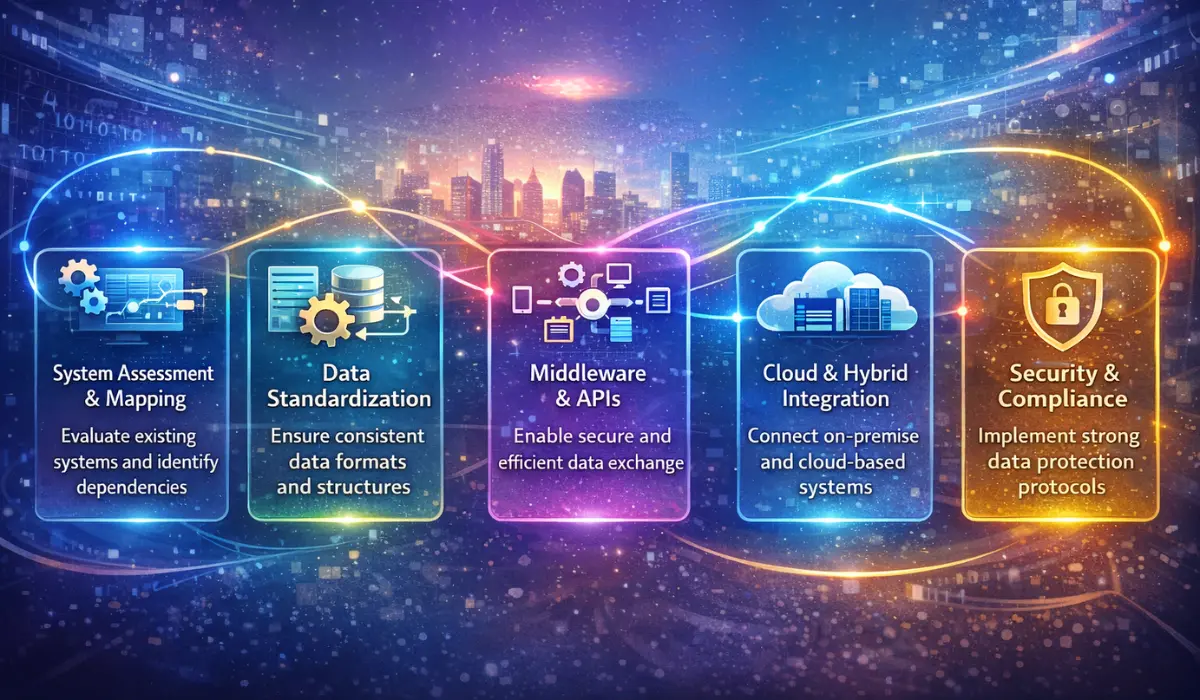
A scalable IT integration strategy is built on several foundational components that ensure systems can communicate effectively while remaining secure and adaptable. These components define how data flows across platforms, how new technologies are adopted, and how organizations maintain stability as they grow. Without these core elements, IT integration efforts may become fragmented and difficult to manage over time.
1. System Assessment and Mapping
Before integration begins, organizations must evaluate existing systems and identify how they interact. This helps in understanding dependencies, eliminating redundancies, and uncovering potential gaps that could affect performance or scalability.
2. Data Standardization
Consistent data formats and structures are essential for seamless communication between platforms. Data standardization ensures accuracy, reduces inconsistencies, and allows systems to exchange information without errors or delays.
3. Middleware and APIs
Middleware platforms and APIs act as bridges between different applications. They enable secure and efficient data exchange, making it possible for systems with different architectures to function together as a unified environment.
4. Cloud and Hybrid Integration
Modern digital ecosystems often combine on-premise and cloud-based systems. Cloud and hybrid integration models provide flexibility, allowing organizations to scale resources, support remote operations, and adopt new technologies without disrupting existing infrastructure.
5. Security and Compliance
Integration must include strong data protection protocols to ensure privacy, security, and regulatory compliance. This involves implementing encryption, access controls, and monitoring systems to protect sensitive information across all connected platforms.
Benefits of Integrated IT Solutions Services

The benefits of integrated IT solutions services extend across all business functions. These services enable organizations to connect systems through professional tools, frameworks, and expertise, ensuring reliable and scalable integration.
Integrated IT services improve operational efficiency by automating workflows and reducing manual tasks. They also enhance data visibility, enabling leaders to make informed strategic decisions. Additionally, they improve customer experiences by unifying customer data across platforms, creating consistent and personalized interactions.
Improved Operational Efficiency
Integrated systems reduce manual work, automate workflows, and minimize errors.
Better Decision-Making
When data flows across systems in real time, leaders gain a complete and accurate view of business operations.
Enhanced Customer Experience
Customer data from different touchpoints can be unified, enabling personalized and consistent service.
Cost Optimization
By eliminating duplicate systems and improving resource utilization, integration reduces operational costs.
Scalability and Flexibility
A well-integrated environment allows businesses to add new tools and technologies without disrupting existing operations.
Integration of IT Systems in Digital Ecosystems
The integration of IT systems plays a vital role in building digital ecosystems where multiple platforms, partners, and users interact dynamically.
In such ecosystems:
- Data becomes a shared asset
- Systems communicate through standardized interfaces
- Automation replaces manual coordination
- Innovation becomes easier and faster
This interconnected approach supports emerging technologies like AI, IoT, blockchain, and advanced analytics, making businesses future-ready.
Challenges in IT Integration
While the advantages are significant, organizations may face challenges such as:
- Legacy systems with limited compatibility
- Data security concerns
- High initial implementation costs
- Lack of integration expertise
- Resistance to organizational change
These challenges can be addressed through proper planning, skilled IT partners, and continuous optimization.
The Future of IT Integration

As digital ecosystems continue to evolve, IT integration will become even more critical. Businesses will increasingly rely on:
- AI-driven integration platforms
- Low-code and no-code integration tools
- Event-driven architectures
- Real-time data synchronization
The future of IT integration lies in intelligent, automated, and self-optimizing systems that adapt to changing business needs.
Conclusion
A strong IT integration strategy is no longer optional; it is essential for organizations aiming to build scalable digital ecosystems. By focusing on the seamless integration of IT systems, businesses can unlock the full benefits of integrated IT solutions services, improve performance, and stay competitive in a digitally driven market.
When executed correctly, IT integration transforms fragmented systems into a unified digital foundation that supports growth, innovation, and long-term success.
FAQs
1. What is IT integration in simple terms?
IT integration is the process of connecting different software systems and technologies so they work together as one unified environment.
2. Why is an IT integration strategy important?
An IT integration strategy ensures that systems are connected in a structured way, supporting business goals, improving efficiency, and enabling scalability.
3. What are the main benefits of integrated IT solutions services?
The main benefits include improved efficiency, better decision-making, enhanced customer experience, cost savings, and business scalability.
4. What does integration of IT systems mean for digital ecosystems?
It means creating an interconnected environment where data and applications communicate seamlessly, supporting innovation and automation.
5. Is IT integration only relevant for large enterprises?
No, IT integration is valuable for businesses of all sizes. Small and medium enterprises also benefit from connected systems and streamlined operations.