Softude
You know your customers better than anyone, or at least you used to. Today, shoppers expect personalized experiences, instant support, and perfect product availability. They compare your store not just to local competitors, but to giants like Amazon and Walmart, whose advanced systems are already boosting their sales.
Retailers who embrace AI are seeing higher profits, fewer empty shelves, and much happier customers. Those who wait risk falling behind in a market that now rewards speed and personalization above all else. The real question is no longer “Should we adopt AI?” but “How fast can we catch up?”
In this post, we’ll show you:
- Why the need to adopt AI in retail is urgent.
- Where AI creates the biggest wins in retail.
- How to start small, scale smartly, and see real results.
Why AI is Essential for Retail Success
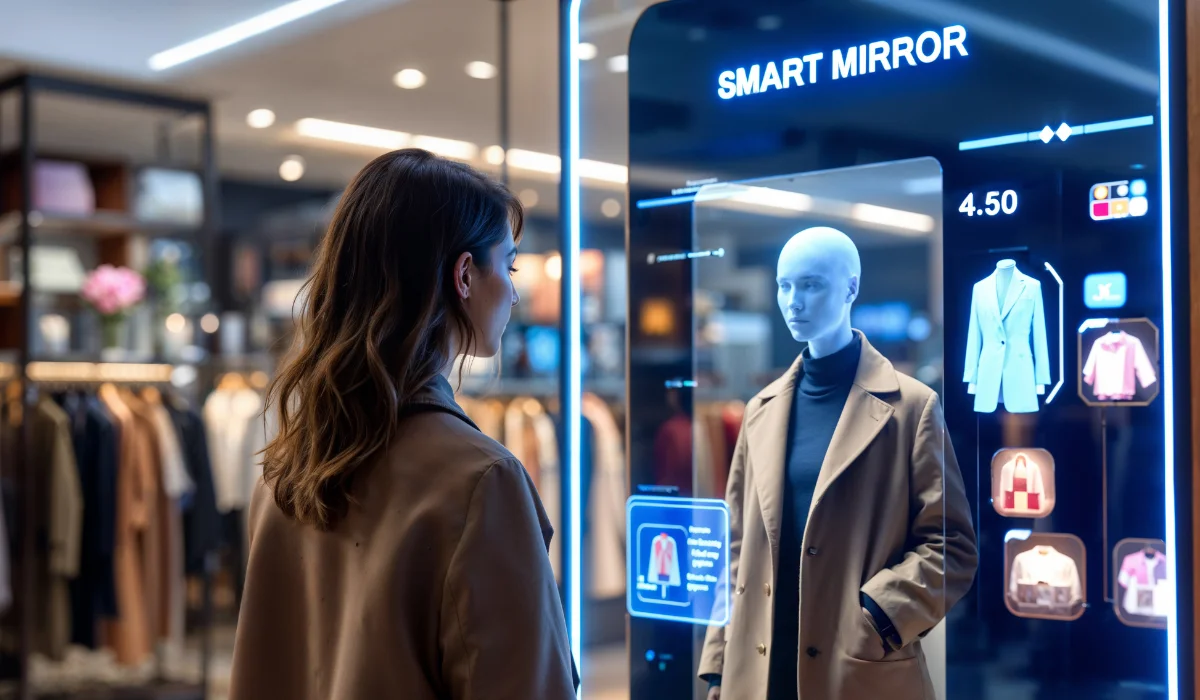
The pressure to integrate AI in retail is growing immediately due to three main factors: meeting demanding customer expectations, keeping up with competitors, and protecting your bottom line.
-
Truly Understand Customer Expectations
Modern shoppers expect convenience and a level of personalization that feels like you can predict what they want. They get annoyed by generic ads and inconsistent service. AI is the only way to deliver this on a large scale.
- Consistent Service: AI ensures a unified experience across your e-commerce site, mobile app, and physical stores.
- Personalized Offers: Promotions and discounts are based on what an individual is most likely to buy, increasing sales without cutting deeply into profit margins.
- Instant Help: Customers get immediate, high-quality answers to service questions, which quickly drives down response times and makes customers happier.
-
Compete with Industry Leaders
The biggest names in retail have invested heavily in AI, setting a new, extremely high standard for performance. They aren’t just winning on price; they’re optimizing their entire operation. They offer faster delivery, flexible pricing, and delightful customer experiences, forcing every other brand to adopt a “catch-up” strategy.
-
Boost Profits and Protect Margins
Retail success depends on tightly managed operations. Costs related to labor, shipping, storage, and lost or damaged inventory directly hurt profit. AI retail solutions offer the most powerful way to become more efficient:
- Reduce Inventory Costs: AI minimizes having too much stock (overstocking), which lowers loss from markdowns.
- Optimize Staffing: By automating repetitive data tasks (customer queries, basic planning), AI frees up employees to focus on strategic work and customer relationships.
- Cut Logistics Costs: Smarter, automated route planning and warehouse management lower shipping and fulfillment expenses.
Also Read: How vCommerce Drives AI Adoption in the Retail Industry
How to Use AI in Retail
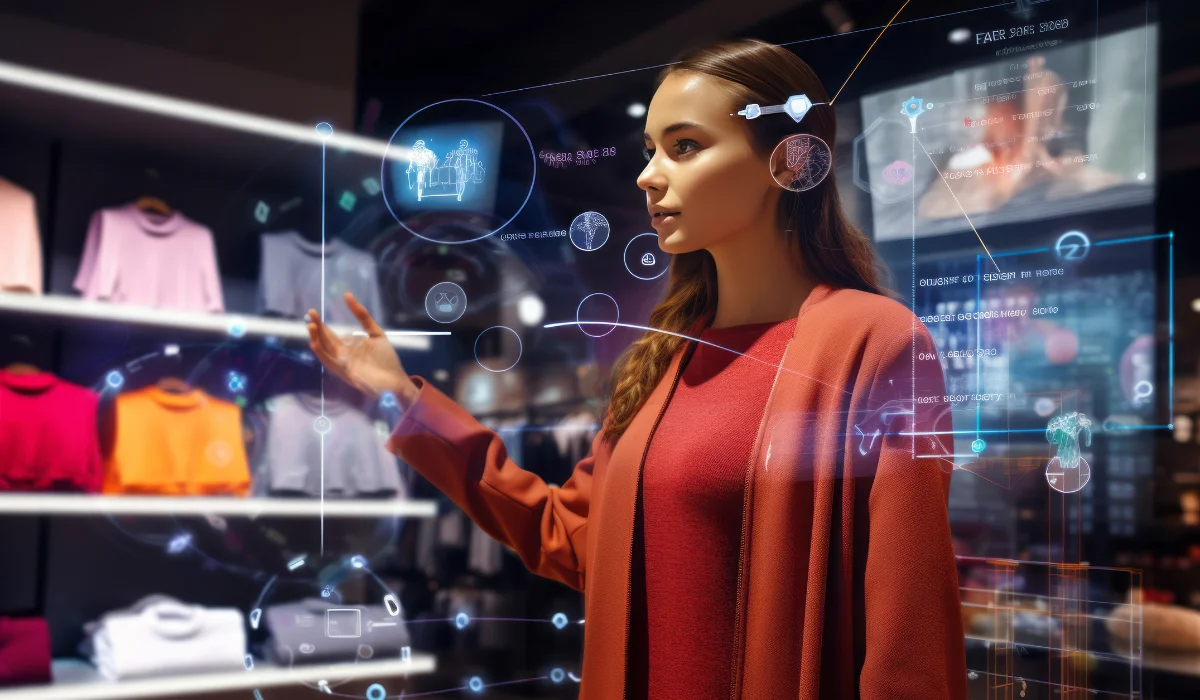
AI’s most valuable applications directly impact sales and operational efficiency.
1. Personalized Shopping Experience
AI analyzes massive amounts of customer data, like browsing history, past purchases, and even local weather, to understand exactly what a customer intends to do next.
- Better Recommendations: AI predicts the “Next Best Action” a customer will take, leading to highly relevant product suggestions, personalized emails, and custom website layouts. For example, Starbucks uses its AI platform, Deep Brew, to analyze 75 million customer profiles and provide individualized offers.
- Smarter Marketing: AI figures out the best time, channel (email, SMS), and message to send, drastically increasing conversion rates and reducing unwanted “spam.”
2. Instant Customer Service with Chatbots
AI chatbots and virtual assistants use advanced language processing to handle about 70–80% of common customer questions instantly and without human help.
- 24/7 Availability: Customers can get support anytime, day or night.
- Faster Answers: Chatbots resolve simple issues like order tracking and FAQs in seconds, improving customer satisfaction scores.
- Support for Human Agents: For complex issues, AI works as a “co-pilot,” giving human agents instant suggestions and customer history to speed up problem resolution.
3. Reduce Returns with Virtual Try-Ons (VTO)
AI-powered Augmented Reality (AR) helps solve the expensive problem of product returns by bridging the gap between digital and physical shopping.
- Virtual Try-Ons: Customers can use their phone to digitally “try on” products (like clothing or furniture). Nike’s AI-powered Nike Fit tool, for instance, scans a customer’s foot for accurate 3D models and sizing, significantly lowering the uncertainty of buying shoes online.
- The Benefit: The largest financial gain here is the substantial drop in product return rates, which directly boosts net revenue.
4. Smarter Supply Chain and Inventory
The supply chain is where AI provides the biggest boosts to efficiency, moving from old guesswork to predictive risk management.
- Precise Demand Forecasting: AI models look beyond simple past sales data and include hundreds of variables: local weather, holidays, competitor prices, and economic trends. This accuracy eliminates two costly problems: empty shelves (lost sales) and too much stock (markdown losses).
- Real-Time Inventory Management: Systems constantly monitor stock levels, identify potential theft, and ensure accurate counts. Starbucks is rolling out AI for automated counting in its coffeehouses, verifying stock eight times more often than manual checks.
- Optimized Logistics: AI aggressively manages the “last mile” of delivery, which is often the most expensive. It uses dynamic routing to adjust delivery paths in real-time based on traffic and vehicle capacity, cutting fuel costs and speeding up delivery.
5. Dynamic Pricing for Maximum Profit
Pricing is no longer a manual task; it is a live strategy that changes moment by moment based on market conditions to maximize profitability.
- Real-Time Pricing: AI continuously monitors competitor prices and market demand to set the best price for a product at any given time.
- Targeted Promotions: Instead of store-wide sales that hurt margins, AI offers an individualized discount only when it knows that a specific incentive is needed to finalize a purchase. This protects the overall profit margin of the transaction.
What Are the Challenges of Using AI for Retail Operations
While AI’s promise is clear, retailers must overcome specific organizational and financial hurdles to succeed.
-
Data Quality and Integration
The success of any AI retail software relies on the quality of your data. If your data is messy, separated (e.g., customer data and inventory data are not linked), or unstructured, the AI model will give you bad results. Retailers must first invest in cleaning their data and creating a unified data platform.
-
High Costs and Proving ROI
Implementing custom AI models can require a large initial investment. Executive teams must define clear, measurable goals (like a reduction in inventory costs or an increase in sales conversion) from the start to prove the investment is worthwhile.
-
Training and Change Management
AI requires new skills across the company. Employees need training on how to use AI-driven tools and, more importantly, how to act on the insights the AI provides. Managing this change is key to ensuring employees see AI as a helpful tool, not a threat to their jobs.
Your Roadmap for AI-Powered Success in Retail
You don’t need to transform everything at once. This roadmap offers a clear, manageable path to starting with AI in retail operations:
- Find High-Impact Projects: Focus on areas that offer the biggest return with the lowest risk. Good starting points are Inventory Optimization (using AI for forecasting your top-selling products) or Personalization (adding an AI product recommendation engine to your website homepage).
- Ensure Your Data is Ready: This is the most critical first step. Clean up your fragmented data sources and consolidate them into a single, structured platform. Remember: Bad data leads to bad AI.
- Run Small Pilot Projects: Start with a contained test (e.g., using AI on one product category or in one region). Use A/B tests to clearly compare the AI approach against your current method and measure progress against financial goals.
- Scale Gradually: Once a pilot proves a clear, measurable return on investment (ROI), create a plan to roll it out across the entire business. Make sure each scaling phase is tied to proven financial success.
Conclusion
Artificial Intelligence is the defining force shaping modern retail. It is the only technology that successfully achieves two goals at once: cutting costs through operational efficiency (supply chain optimization) and creating a superior brand experience (hyper-personalization).
For retailers navigating today’s competitive market, AI is not a future trend; it is the essential tool for strategic survival and profitable growth. The most successful brands of tomorrow are those that use AI in retail.
If you need any assistance determining whether you are ready to implement AI or need a custom AI solution, a GenAI chatbot, or AI agents, feel free to connect with us.
FAQs
1. How is AI currently being used in retail?
Well, AI is everywhere in retail now. It’s powering personalized recommendations, running chatbots for customer service, forecasting inventory needs, dynamically adjusting prices, and even spotting fraud. Basically, it’s helping retailers improve both customer experience and efficiency.
2. How much can AI reduce operational costs in retail?
AI can make a big difference, up to 20% savings in some cases. That’s achieved through smarter inventory control, automated customer service, and optimized logistics.
3. Is AI worth the investment for small retailers?
Absolutely. You don’t need to go big right away. Start by focusing on areas like inventory or customer service. There are also affordable, cloud-based AI tools that make it easy to get started.
4. What are the biggest challenges in adopting AI?
Poor data quality, high upfront costs, training your team, and ensuring safe customer privacy are a few hurdles to adopting AI in the retail industry. But these challenges can be managed with the right approach.
5. How is AI used to improve customer experience in physical stores?
Definitely, AR try-ons, smart fitting rooms, and even computer vision can make shopping more engaging and personalized. It’s a great way to stand out.
6. What are the popular AI retail solutions?
The best AI tools for retailers are Salesforce Einstein for customer insights, Dynamic Yield for personalized recommendations, Microsoft Azure AI for demand forecasting and fraud detection, and C3 AI for inventory and pricing strategies. Others like Kimonix and Stackline focus on merchandising and retail analytics. These tools are mainly used for tasks like predicting demand, improving customer engagement, automating processes, and reducing operational costs.