Softude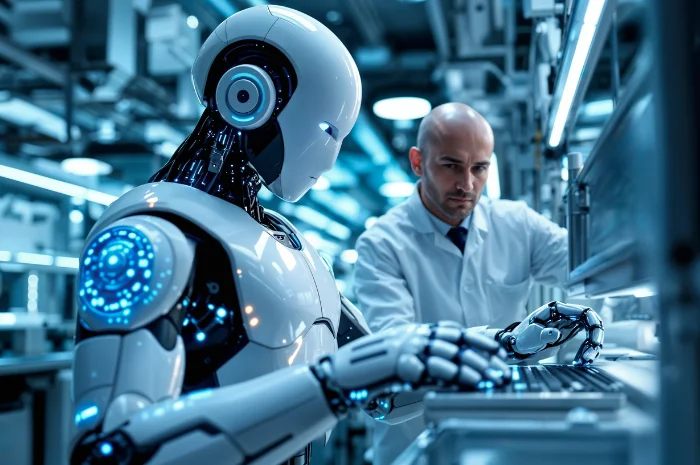
Imagine a critical machine on your factory floor starts vibrating more than it should, not enough to trigger an emergency stop, but enough to signal that something is about to fail. Your current automation doesn’t notice. It keeps running until the machine finally breaks. By the time the morning shift arrives, you’ve lost hours of production, wasted material, and now face an unexpected maintenance cost.
What if that machine could self-diagnose the problem, check its own parts inventory, order a replacement from a pre-approved vendor, and schedule a technician for a quick fix before the failure happens? That shift from simple, reactive automation to proactive, self-directed action is exactly what Agentic AI makes possible.
In this blog, we’ll explain what an AI agent actually is, how it goes beyond traditional automation, and share practical use cases of AI agents in manufacturing.
What is Agentic AI?
You may already be using AI tools for prediction (like forecasting demand). That’s valuable, but it’s only half the story. To understand the immense value of agentic systems, we must understand agentic AI and how it is different from other AI.
Standard AI: The Smart Advisor
Standard AI is a reporting tool. It analyzes historical and current data (like market trends or sensor readings) and tells you, “This is what will likely happen.” It gives you predictive intelligence, but the decision-making and manual execution are still on your plate.
AI Agent: The Smart Employee
Agentic AI is built to execute a mission. It is a system designed to perceive its environment, reason through complex problems, generate a multi-step plan, and, most importantly, take autonomous action to achieve a defined goal. It doesn’t just give you a report; it works tirelessly to solve the problem and drive results.
Why AI Agents Are Useful in Manufacturing
Manufacturing is defined by variability: fluctuating supply chains, unpredictable machine health, and dynamic customer demands. Traditional hard-coded automation is fragile; it fails when conditions change.
Agentic AI thrives in chaos because it is goal-oriented and highly adaptable. If you set the agent’s objective as “Maximize throughput while maintaining quality above 99.5%,” it will continuously coordinate machine settings, energy draw, and inventory orders to hit that target, reacting instantly to any disruption in the process.
These capabilities make Industry 4.0 AI agents far more adaptable than traditional automation.
Working of Agentic AI in Manufacturing
Agentic AI merges digital intelligence with physical command execution. They
- See (Perception): The agent gathers real-time data from every corner of your facility,, Industrial IoT sensors, machine vision cameras, and existing system logs (ERP, MES). It doesn’t just see numbers; it sees context.
- Think (Reasoning & Planning): This is the core capability that makes agents unique. The AI brain processes the data against its overall mission, generating a multi-step plan. For example: “If vibration levels are high and the maintenance history shows a failure trend, then the system will send an alert, order the required part, and reduce the motor load by 10%.”
- Do (Action): The agent executes the plan instantly by interfacing directly with your machinery, robotic controllers, or back-office systems. It turns abstract thought into measurable, physical change.
5 Benefits of Using AI Agents in Manufacturing
The true value of AI agents in manufacturing is measured in concrete business outcomes.
1. Achieve Unprecedented Speed and Responsiveness
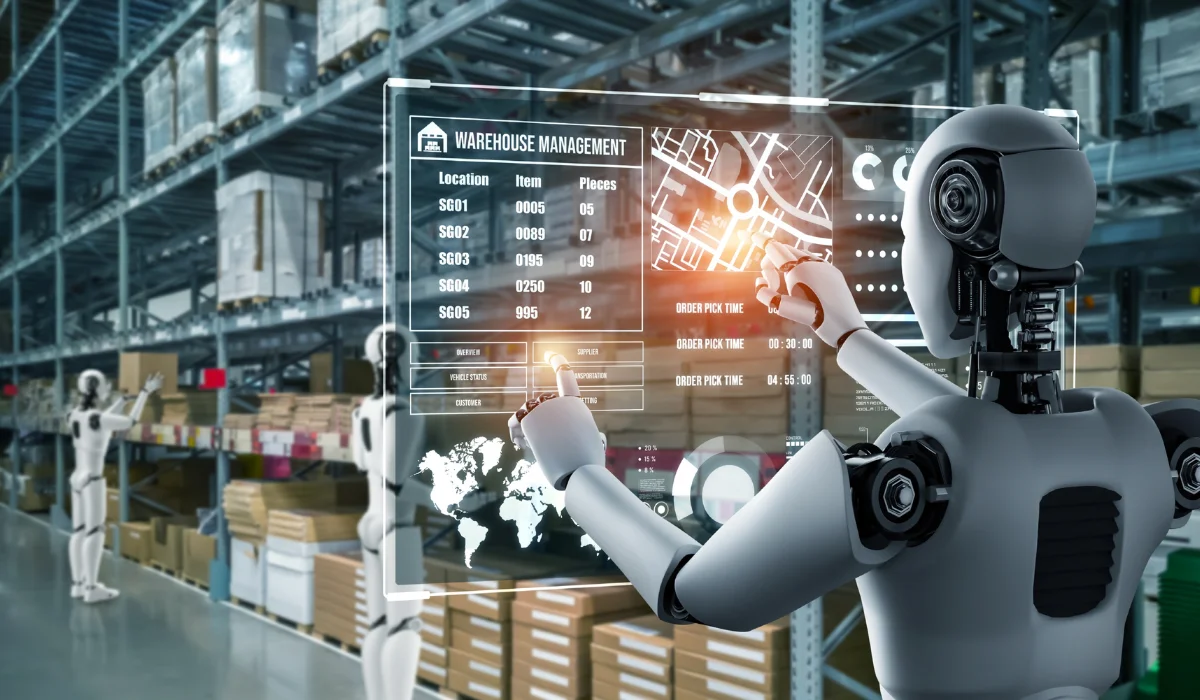
Every second an operator spends noticing, diagnosing, and fixing a problem is lost productivity. AI agents eliminate this human latency. They perform vital micro-adjustments in milliseconds to maintain production quality and throughput, preventing minor hiccups from escalating into costly downtime. This instant, hyper-local responsiveness is the key to maximizing Overall Equipment Effectiveness (OEE).
2. Significant Cost Reduction Through Optimization
Agents are hyper-efficient. They manage resource consumption, from energy to raw materials, with a precision that is impossible for human operators. They dynamically schedule energy-intensive tasks during off-peak hours, minimize scrap by instantly correcting defects, and ensure equipment runs at its optimal efficiency curve, leading to substantial savings on utilities and materials.
3. Superior and Consistent Product Quality
Why wait for end-of-line inspections? Agentic systems monitor hundreds of manufacturing parameters in real-time. If a machine starts drifting even subtly, the agent executes a corrective action at the source rather than just flagging the error. This proactive, closed-loop quality management drastically reduces scrap rates and guarantees product consistency.
4. Enable True Manufacturing Flexibility
Today’s market demands high-mix, low-volume production. Agents provide the flexibility to deliver. If a rush, custom order arrives, the agent can instantly calculate resource availability, adjust material routing, and reprogram robotic cells on the fly to accommodate the change without the need for manual setup or downtime.
5. Measurably Enhanced Worker Safety
By delegating the constant monitoring of hazardous conditions or high-risk machinery to AI agents, you significantly reduce human exposure to danger. Safety agents can monitor video feeds to detect deviations (like a worker too close to heavy equipment) and intervene by slowing or stopping the machinery faster than any human reaction time.
12 High-Impact Use Cases of Autonomous AI for Factories
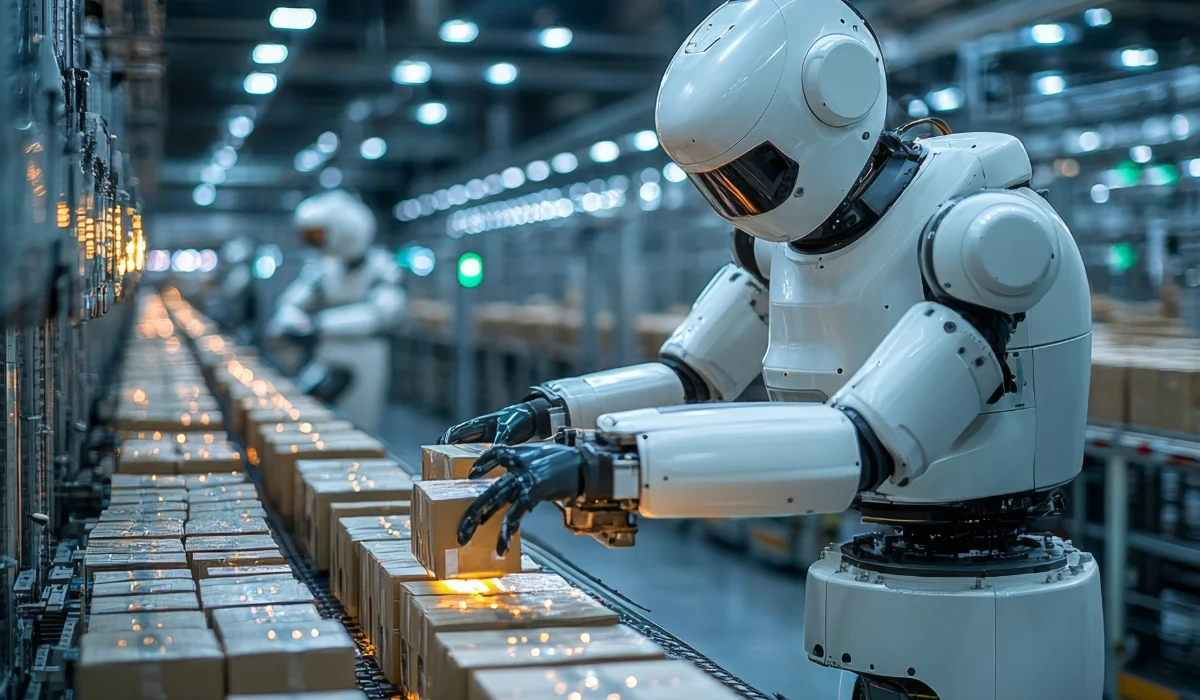
If you’re wondering where to use AI agents in manufacturing, start with these popular use cases.
1. Smart Maintenance & Autonomic Repair
Detects a critical vibration anomaly, finds a 30-minute window between shifts, orders the replacement bearing from the ERP system, and schedules the technician, all automatically, without human intervention.
2. Adaptive Supply Chain Assistant
Integrated with real-time logistics data, the AI agent designed for supply chain management anticipates delays (e.g., due to weather or port congestion) and autonomously reroutes the shipment or sources the material from an approved alternative supplier to prevent a line-down situation.
3. Production Line Flow Manager
Acts as a “line traffic cop” by monitoring buffer stock levels between workstations. If a specific station begins to bottleneck, the agent dynamically adjusts the speed of the feeder lines or diverts work to an idle auxiliary machine to maintain continuous flow.
4. Zero-Defect Quality Assurance
Uses high-speed cameras to identify a defect pattern (e.g., a specific misalignment). It instantly instructs the upstream machine, causing the error to recalibrate its settings, correcting the process before any more scrap is produced.
5. Automated Energy Optimization
Monitors real-time utility market prices and internal production priorities. It dynamically schedules high energy-intensive tasks (like compressor cycles or curing ovens) to run only during optimal, low-cost off-peak hours.
6. Resilient Dynamic Scheduling
When unexpected events occur (machine failure, material shortage, or large rush order), the agent instantly recalculates the entire production sequence, minimizing delay and ensuring high-priority jobs still hit their deadlines.
7. Inventory Prediction & Management
Based on current consumption rates and upcoming order forecasts, the agent automatically generates purchase requests for low-stock items and directs AGVs to optimize storage locations for faster picking.
8. Robotic Fleet Coordination
In large facilities, the agentic AI manages mobile robots like an air traffic controller, optimizing routes, preventing collisions, and ensuring priority materials are moved first while managing battery charging schedules.
9. Proactive Safety Monitoring
Uses existing video feeds to detect deviations from safety protocols (e.g., a safety gate opened improperly). It issues a warning and, if necessary, automatically engages a “safe mode” or reduces power to the nearby equipment.
10. Automated Compliance & Reporting
Continuously logs process data required for regulatory standards (like ISO or FDA). It automatically generates auditable reports and flags any non-compliant processes for immediate human review, saving hundreds of hours of manual work.
11. Worker “Co-Pilot” and Assembly Guidance
Guides human operators through complex, custom assembly using AR or on-screen prompts. If the operator makes an error, the AI agent instantly provides the correct troubleshooting steps and adjusts the pace of the line.
12. Total Production Synchronization (End-to-End)
The ultimate integrator. If a design change is made in the CAD system, the agent automatically updates the Bill of Materials (BOM), modifies the procurement request, and adjusts the CNC machine programs, all simultaneously.
Critical Challenges and Practical First Steps
Using AI agents in manufacturing is a strategic undertaking. Here are the practical hurdles and how to address them.
1. Integration with Legacy Systems
Most industrial sites are “brownfield,” full of proprietary machines and decades-old controllers. Connecting a sophisticated AI agent to this infrastructure is challenging.
Practical Tip: Don’t try to integrate the AI agent directly into the old machine. Instead, implement a modern Industrial IoT (IIoT) layer first. This layer acts as an abstraction, using sensors and gateways to normalize data from all your machines into a single, clean input stream that the AI agent can easily understand.
2. Data Security and Governance
When you grant software autonomous power (e.g., ordering parts or shutting down a line), security becomes paramount. You need protection against external threats and misuse.
Practical Tip: Implement strict governance frameworks. Define the agent’s precise scope of authority (e.g., budget limits on automated orders, mandatory human confirmation for system-wide shutdowns). Crucially, use immutable data logging to track and audit every single decision the agent makes.
3. Workforce Training and Change Management
The most successful AI deployments involve humans, not replacing them. The operator’s role shifts from a person who performs tasks to a high-value supervisor who manages, trains, and monitors the fleet of AI agents.
Practical Tip: Invest heavily in upskilling. Focus on teaching your existing team how to interpret the agent’s reasoning, troubleshoot complex failures, and provide feedback to improve the agent’s performance. This turns fear of replacement into excitement about a new, more strategic role.
Final Thoughts
Agentic AI is the evolutionary next step for any manufacturer who has maximized the gains from traditional automation. It moves your operation from reactive firefighting to proactive, autonomous optimization.
For manufacturers, the critical takeaway is simple- manufacturers that use Agentic AI will rapidly pull ahead of those that remain dependent on rigid, hard-coded systems. The risk of standing still is now far greater than the risk of starting your AI journey.
Ready to upgrade your operations? Get a custom AI agent built for your manufacturing needs.