Softude
Multiple AI agents do not coordinate on their own just because each one is capable individually.
AI agent orchestration is the layer that coordinates multiple AI agents by deciding who does what, when they act, what information they receive, and what happens to their output.
A reliable multi-agent system needs more than capable models. It needs clear agent responsibilities, an appropriate orchestration pattern, deliberate routing, structured agent communication, an explicit workflow, and failure handling.
Without those controls, agents can duplicate work, lose context during handoffs, or fail silently.
Key Highlights
- AI agent orchestration coordinates multiple agents by controlling task assignment, routing, communication, workflow execution, and failure handling.
- Multi-agent orchestration is useful when work can be meaningfully separated through context boundaries, parallelism, specialization, or verification.
- Orchestrator-worker, sequential, hierarchical, and decentralized architectures address different AI agent coordination requirements.
- Agent responsibilities should be separated by context and capability, not simply by job title.
- Effective agent communication should pass relevant, structured information rather than entire contexts.
- Agent workflow orchestration makes execution easier to control, evaluate, recover, and observe.
- Security, evaluation, and observability become increasingly important as multi-agent systems grow in complexity.
Why Do Multiple AI Agents Need Orchestration?
Multiple AI agents need orchestration because dividing a task across agents does not remove coordination work; it moves that work into the system architecture.
With a single agent, the task, context, tools, and decisions generally remain within one execution flow. With multiple agents, that context is distributed across separate agents.
An AI agent coordination layer therefore needs to decide:
- Which agent handles each task
- What information is passed between agents
- When each agent should act
- How outputs are combined
- What happens when an agent fails
- When a human should take over
Without an orchestration layer, the result can be duplicated work, lost context, conflicting outputs, or failures that are difficult to detect.
There is also a cost to coordination. Anthropic has reported that multi-agent systems can consume significantly more tokens than a single agent performing the same task because every additional agent introduces more context, messages, and handoffs.
That means multiple agents are not automatically better than one agent. They are most useful when:
- A subtask generates a large amount of information that the rest of the system does not need.
- A task can be divided into genuinely independent pieces that can run in parallel.
- An agent has too many tools or conflicting instructions to perform one role reliably.
- A separate agent can independently verify an output.
If none of these conditions exists, adding agents can introduce coordination overhead without providing a meaningful benefit.
Also Read: Single AI Agent vs Multi-Agent Systems
What Is Multi-Agent Orchestration?

Multi-agent orchestration is the code, workflow, and rules that determine how multiple AI agents work together to complete a larger task.
It is not another, smarter agent. It is the system built around the agents. Consider a customer support workflow with three agents:
- A support agent triages the request.
- An inventory agent checks product availability.
- A refund agent processes eligible refunds.
If these agents operate independently, the refund agent may process a refund without knowing that another part of the workflow has already resolved the issue.
The problem is not necessarily an agent’s reasoning ability. The problem is that no coordination layer owns the sequence, handoffs, and shared state.
Multi-agent orchestration provides that missing coordination layer.
It acts much like an expediter in a restaurant kitchen. Each station can perform its specialized task, but the expediter coordinates timing, tracks the order, checks completed plates, and sends work back when something is wrong.
The agents perform the specialized work. The orchestration layer keeps the overall task moving correctly.
What Are the Main AI Agent Orchestration Patterns?
The main AI agent orchestration patterns are orchestrator-worker, sequential pipelines, hierarchical orchestration, and decentralized or peer-to-peer coordination.
The right pattern depends on how much control, visibility, and flexibility the workflow requires. These patterns are core choices in AI agent architecture.
| Pattern | How work is assigned | Best fit | Main risk |
| Orchestrator-worker | A lead agent plans and delegates to worker agents | Tasks that decompose into independent or parallel pieces | Higher token and coordination costs |
| Sequential pipeline | Each agent consumes the previous agent’s output | Well-defined, linear processes | Errors can propagate downstream |
| Hierarchical | Orchestrators delegate to other orchestrators and agents | Large systems spanning multiple domains | Added complexity and harder failure tracing |
| Decentralized / peer-to-peer | Agents communicate directly without one central controller | Narrow negotiation-style exchanges | Difficult to audit and control |
- Orchestrator-Worker Pattern
In an orchestrator-worker architecture, a lead agent breaks a task into subtasks, delegates them to specialized agents, and combines their results.
For example:
Research request → Lead agent → Market research agent + Competitor research agent + Customer research agent → Synthesis
This pattern works particularly well when subtasks are sufficiently independent to run in parallel.
It is also the pattern used in Anthropic’s multi-agent research system, where a lead agent delegates research to subagents working on different aspects of a query.
The trade-off is coordination overhead. Every additional worker introduces more model calls, context, and outputs that the orchestrator must manage.
- Sequential Pipeline
A sequential pipeline passes work between agents in a predefined order.
For example:
Input → Classification → Analysis → Verification → Output
This works well when the process is already understood as a series of dependent steps.
Its weakness is error propagation. If an early agent produces an incorrect result, downstream agents may continue working from that incorrect result unless the workflow includes checkpoints or verification.
- Hierarchical Orchestration
Hierarchical orchestration uses multiple levels of coordination, with one orchestrator delegating to other orchestrators or domain-specific agent groups.
For example:
Enterprise orchestrator → Maintenance orchestrator → Diagnostic agent + Scheduling agent + Parts agent
This architecture can make large, multi-domain multi-agent systems easier to organize because each domain has its own coordination layer.
The trade-off is additional complexity. When something fails, developers may need to trace the execution through several orchestration levels.
- Decentralized Orchestration
Decentralized orchestration allows agents to communicate directly without relying on a single central controller.
This can work for narrow negotiation or peer-to-peer interactions where agents need to exchange information directly.
The disadvantage is observability and control. As more agents communicate directly, it becomes harder to understand who made a decision, why an agent received a task, and where an error originated.
For that reason, even systems that allow direct agent-to-agent communication often retain some form of central orchestration for the overall workflow.
Most production architectures are also hybrids rather than pure examples of one pattern.
How Should You Split Responsibilities Between AI Agents?
To design an effective multi-agent system, split responsibilities around context boundaries and capabilities, not simply around job titles or types of work.
This is one of the most important decisions in AI agent architecture.
It may seem logical to create separate agents for:
Planner → Implementer → Tester → Reviewer
But this can create unnecessary handoffs.
If the agent implementing a feature already understands the implementation decisions and has the relevant code context, separating testing into another agent may force the system to transfer context that the second agent needs but does not naturally have.
Every handoff introduces the possibility of information loss. Better boundaries exist where the work is genuinely independent.
For example:
- Independent research paths that do not share context
- Components connected through a clean interface
- Tasks requiring distinct capabilities or toolsets
- Verification tasks where the verifier only needs the output and evaluation criteria
How Does Routing Work in a Multi-Agent System?
Routing determines which agent should receive a request or subtask. Without explicit routing, a multi-agent system has no reliable way to determine which specialist should act.
Three approaches cover most routing requirements.
- Rule-Based Routing
Rule-based routing uses predefined conditions to select an agent.
For example:
- Billing request → Billing agent
- Inventory request → Inventory agent
- Technical issue → Technical support agent
It is fast, predictable, and easy to audit.
The limitation is that rigid rules struggle when a request does not fit neatly into one category.
- Model-Based Routing
Model-based routing uses a classifier or another AI model to interpret the request and select the appropriate agent.
This handles ambiguous requests better than fixed rules.
The trade-off is an additional model call and the possibility of incorrect classification.
- Capability-Based Routing
Capability-based routing selects an agent based on the capabilities it provides rather than relying entirely on hardcoded task categories.
This becomes useful when agents are built by different teams, use different frameworks, or operate across system boundaries.
The broader principle is that an agent can advertise what it is capable of doing, while an orchestration layer determines whether that capability matches the task.
Regardless of the routing method, define what happens when the system is uncertain.
A general-purpose fallback or human escalation is safer than allowing a low-confidence routing decision to send a task to the wrong specialist.
How Do AI Agents Communicate With Each Other?
Agent communication should use thin, structured messages containing the information the next agent actually needs, rather than passing the entire context.
For example, an agent diagnosing a technical issue may not need a customer’s complete order history.
It may only need:
- Customer ID
- Product ID
- Order status
- Relevant date
- Current issue
- Actions already attempted
Passing the complete context increases token usage and can introduce irrelevant information.
Every handoff should therefore answer: What does the next agent need to perform its responsibility?
This makes agent communication more efficient and reduces context pollution.
Is MCP the Same as A2A?
No. MCP and A2A address different communication problems. MCP (Model Context Protocol) standardizes how AI applications and agents connect to tools and external data.
A2A (Agent2Agent) focuses on how independent agents discover each other, exchange tasks, and track work across agent boundaries.
In simple terms:
MCP = agent-to-tool and agent-to-data communication
A2A = agent-to-agent communication
These protocols should not be treated as mandatory components of every multi-agent system.
If several agents operate inside one controlled application, a simple internal message format may be enough. A2A becomes more relevant when agents need to communicate across organizational, vendor, or framework boundaries.
How Do You Structure Agent Workflow Orchestration?
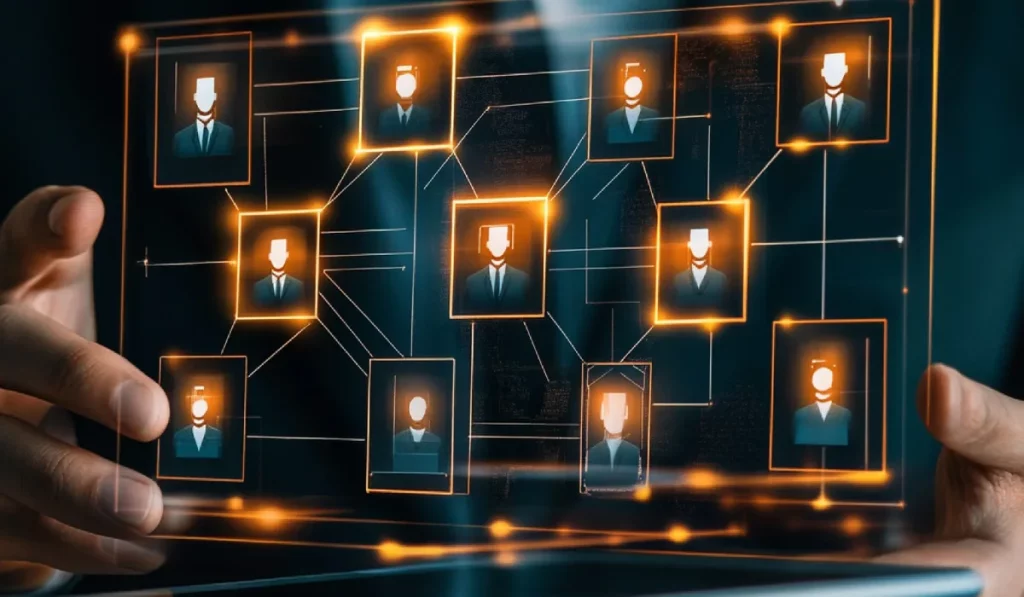
Agent workflow orchestration defines the sequence, state, branches, and handoffs that determine how a multi-agent workflow executes.
A multi-agent workflow should usually be represented explicitly as a graph or state machine instead of allowing agents to improvise the entire execution path.
Explicit workflows make execution easier to test, observe, and recover.
- Directed Graph Workflows
A directed graph defines the possible paths between workflow steps.
For example:
Input → Validation → Parallel processing → Combine results → Verification → Output
A graph works well when the overall workflow is known but includes branches or parallel execution.
Frameworks such as LangGraph use this approach to make workflow paths explicit rather than relying entirely on free-form agent loops.
- State Machines
A state machine is useful when the next step depends on the current state or the result of a previous action.
For example:
Review → Approved → Complete
or:
Review → Rejected → Revision → Review
State machines are useful when workflows have clear conditions, transitions, and recovery paths.
Why Are Checkpoints Important?
Checkpoints preserve what has already happened and what should happen next. This matters because multi-agent workflows can fail several steps into an execution.
Without durable state, the system may need to restart the entire workflow. With checkpoints, it can resume from the last known state.
The same execution record can also support evaluation and observability by showing what each agent did and how the workflow reached its final result.
How Should Multi-Agent Systems Handle Failures?
Multi-agent systems should assume that individual agents, tools, and handoffs will sometimes fail. Failure handling should therefore be designed into the multi-agent orchestration layer from the beginning.
Key mechanisms include:
- Verification
A verification agent checks another agent’s output against explicit criteria.
This works particularly well when the verifier does not need the full context behind the original work.
For example, a testing agent can evaluate whether an implementation passes a defined test suite without needing to understand every decision made during development.
One failure mode is what Anthropic’s engineering team describes as an early-victory problem: a verifier performs one quick check, sees a successful result, and stops even though additional failures remain.
The solution is to define verification precisely. Instead of: Check whether the implementation works. Use a requirement such as: Run the complete test suite, report every failure, and include tests that are expected to fail when given invalid inputs.
- Bounded Retries
Retries should be limited and informed by the actual failure. Repeating the same instruction two or three times does not solve a deterministic failure.
A better retry passes the failure information into the next attempt and limits how many times the system will retry.
- Fallback Routing
A failed or unavailable agent should have a defined fallback path. That fallback could be:
- Another specialist
- A general-purpose agent
- A different tool
- Human review
The workflow should not simply wait indefinitely for a failing component.
- Circuit Breaking
Repeated failures should stop the system from continuing to send work to a broken agent or tool.
This prevents a failing component from consuming resources while producing no useful progress.
- Human Escalation
High-risk or ambiguous tasks should have an explicit human handoff point.
The system should define when an agent is no longer authorized to continue rather than expecting agents to resolve every uncertainty autonomously.
The key principle is:
Do not wait until the final output to discover that an earlier agent introduced an error.
In a multi-agent system, an error can pass through several downstream agents and become harder to detect at each step.
What Are the Main Production Challenges of Multi-Agent Orchestration?

The main production challenges of multi-agent orchestration are security, evaluation, observability, coordination overhead, and reliability.
A multi-agent system is more difficult to reason about than a single-agent system because there are more execution paths and more points where something can go wrong.
Three questions become particularly important in production:
What can each AI agent access or act on behalf of?
An agent that can modify business data, trigger transactions, or access sensitive systems needs clearly defined permissions and boundaries.
Also Read: Best Practices to Secure Multi-AI Agent Systems
How do you evaluate a multi-agent system?
Evaluating individual agents is not enough. The complete workflow needs to be evaluated because failures can emerge from interactions between agents.
Teams should test what happens when agents produce incorrect, incomplete, conflicting, or unexpected outputs.
How do you observe an AI agent workflow?
The orchestration layer should capture enough execution state to understand:
- Which agent acted
- What input it received
- What it returned
- Which decision routed the task
- What happened next
- Where the workflow failed
Without this visibility, debugging a multi-agent system becomes significantly harder.
What Are the Best Practices for AI Agent Orchestration?
The most important practices are:
- Start with the simplest architecture that solves the problem. Use multiple agents only when specialization, parallelism, context separation, or verification provides a clear benefit.
- Choose the orchestration pattern based on the workflow. Do not select an architecture because it appears more sophisticated.
- Split responsibilities by context boundaries. Avoid creating agents whose work requires constant context transfer.
- Route every task deliberately. Define what happens when routing confidence is low.
- Keep agent communication thin and structured. Pass the required information rather than entire contexts.
- Make important workflows explicit. Use graphs or state machines when the execution path needs to be controlled.
- Add verification before errors propagate. Check outputs at meaningful boundaries rather than only at the end.
- Use bounded retries and fallback paths. A failed agent should not stall the entire workflow.
- Maintain durable execution state. This supports recovery, evaluation, and debugging.
- Evaluate the system as a whole. Agent-level performance does not guarantee reliable multi-agent behavior.
More capable agents raise the ceiling on what coordinated AI systems can accomplish. They do not remove the need for AI agent orchestration.
Frequently Asked Questions
The main patterns are orchestrator-worker, sequential pipelines, hierarchical orchestration, and decentralized or peer-to-peer coordination.
Use explicit workflows, structured handoffs, verification, bounded retries, fallback routing, circuit breaking, durable state, and human escalation where appropriate.
Not necessarily. Multi-agent systems introduce additional coordination and token costs and are most useful when parallelism, specialization, context separation, or independent verification provides a clear advantage.