Softude
Technology is evolving at lightning speed, and with it come terms that often sound similar. Simulated Intelligence, Synthetic Intelligence, and Artificial Intelligence are three such concepts that are frequently misunderstood.
While all three aim to create “intelligent” systems, their goals, capabilities, and applications vary significantly. In this blog, we’ll break down what simulated intelligence really is, show real-world examples, and compare it with synthetic and artificial intelligence so you can clearly understand the differences.
What is Simulated Intelligence
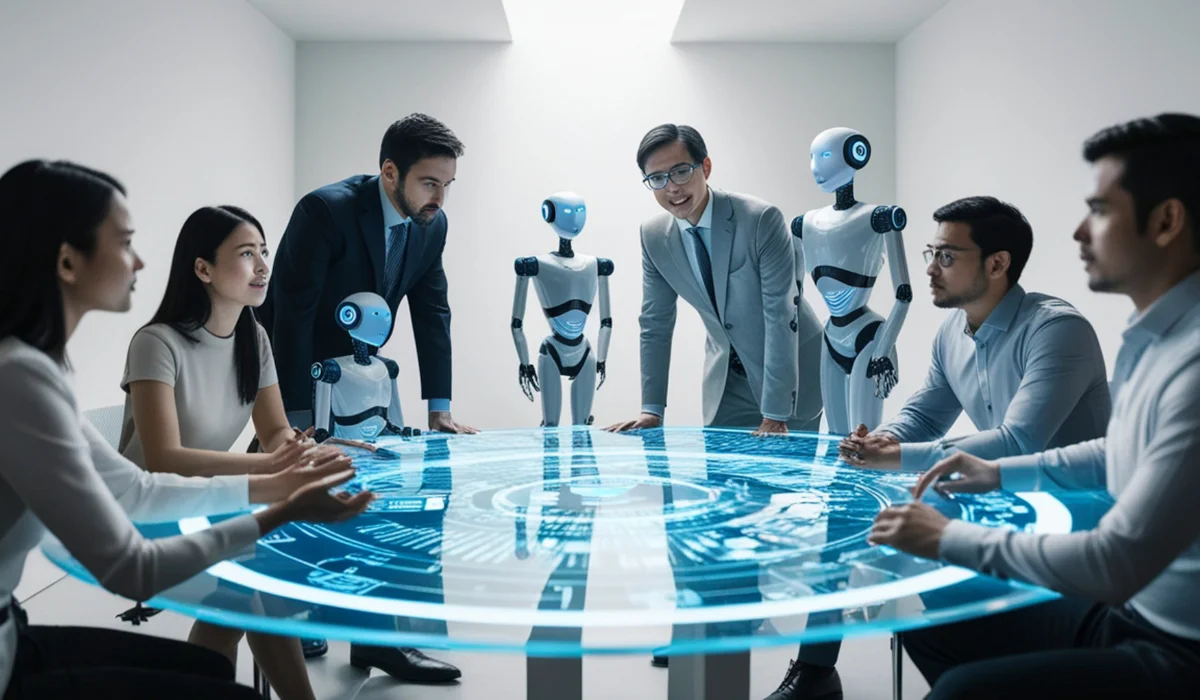
Simulated intelligence refers to systems that imitate human-like reasoning or behavior within a controlled environment. Unlike artificial intelligence, which learns and adapts autonomously, simulated intelligence focuses on modeling processes for prediction, testing, and training purposes.
Think of it as creating a “virtual brain” that behaves like a human in specific scenarios, but without true autonomy or consciousness.
Key Characteristics
- Goal: To replicate decision-making or behavior for analysis and training.
- Environment: Usually operates in virtual or controlled settings.
- Adaptability: Limited, depends on predefined models and assumptions.
Imagine you are a large logistics company wanting to build a massive new automated warehouse. You wouldn’t build the whole structure and install millions of dollars’ worth of machinery just to see whether the robot paths would cause traffic jams. Instead, you build a Simulated Intelligence model, a “Virtual Twin” of the warehouse.
This model is a computer program that acts exactly like the real system: it includes the physical layout, the speed of the conveyor belts, the schedules of the picking robots, and the flow of packages.
The virtual warehouse behaves in a way that closely matches the real one, but it doesn’t need to learn or change things on its own. It is a controlled environment. The people running the simulation can change variables (like adding more robots or making a certain machine break down), watch what happens, and refine their understanding of the best layout and staffing levels before any physical construction begins.
Crucially, SI does not aim for an autonomous system that runs the whole business; its purpose is to be a safe, digital testing area where managers can predict outcomes and optimize strategies without the cost, danger, or time delay of using the actual, physical business system.
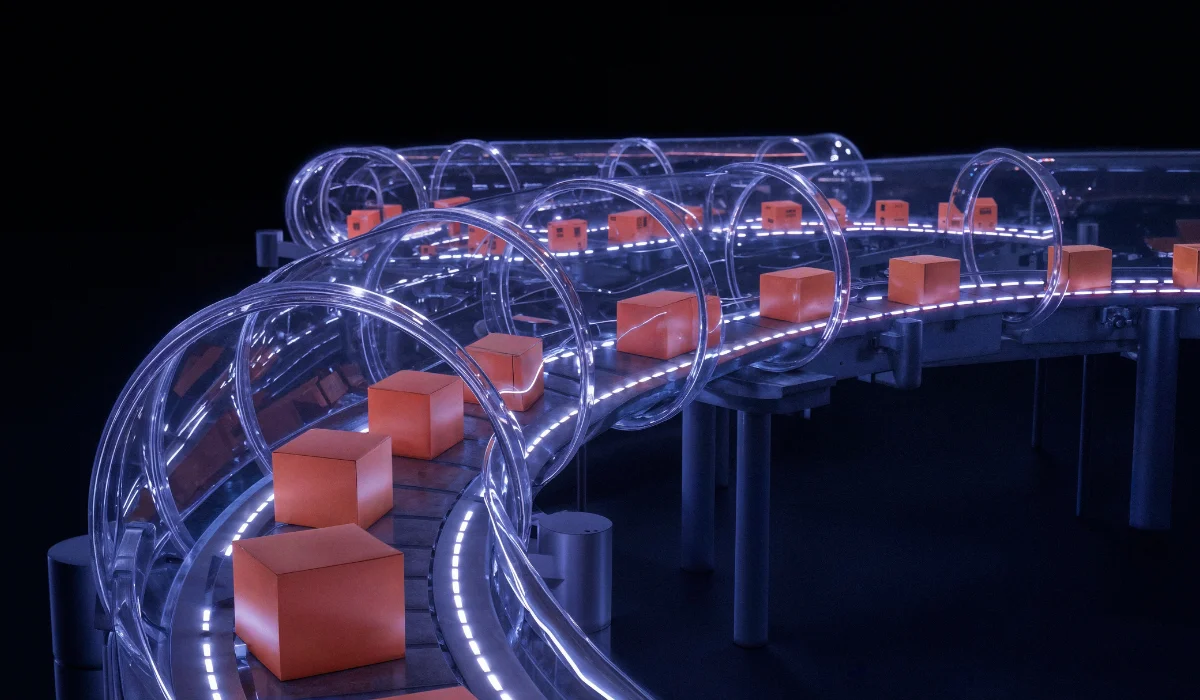
- Supply Chain Stress Testing: Large retailers use SI models to copy their entire global supply chain, including factories, shipping routes, ports, and inventory warehouses. They can then simulate disruption events (e.g., a major port closure, a sudden spike in demand, or a political trade dispute) to find weak points and pre-determine the fastest, cheapest path to recover. The SI tool predicts the exact delay and cost impact of each scenario.
- Manufacturing Process Optimization: Automotive companies use SI to create a digital copy of their assembly line. They can test changes to the production process (e.g., adding a new robot, changing a welding speed) to ensure it does not create a bottleneck down the line, without having to stop the real, expensive factory floor.
- Financial Trading Risk Management: Investment firms use highly specialized SI programs called Monte Carlo Simulations to copy the behavior of financial markets. By running the simulation thousands of times with random variables (like interest rates or stock prices), they can predict the possible range of future losses or gains on an investment portfolio, helping them calculate and manage their risk exposure.
- Retail Store Layout and Staffing: Fast-food chains or large department stores use SI to copy the flow of customers through a store. They can simulate different store layouts, register placements, or staffing levels to figure out how to minimize customer wait times and maximize service efficiency before making expensive physical changes.
What is the Difference Between Simulated, Synthetic, and Artificial Intelligence
Although these three concepts sound similar, they serve very different purposes.
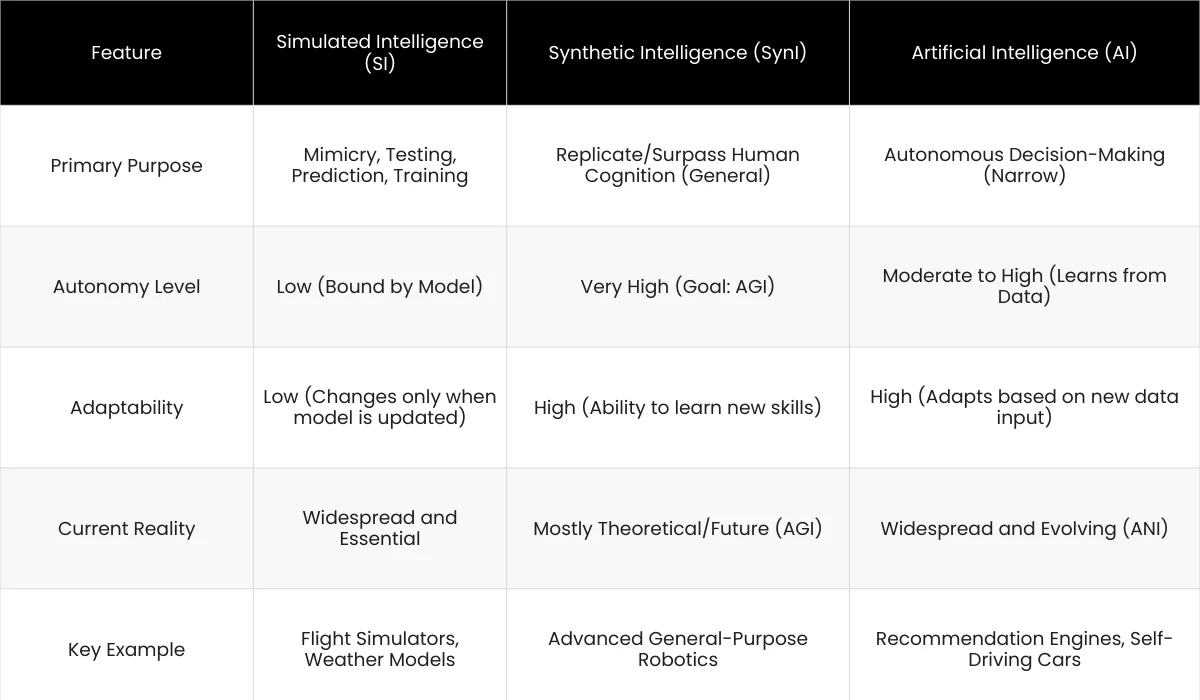
Simulated Intelligence (SI) is primarily used to test outcomes before real-world implementation. It doesn’t think independently; instead, it models scenarios based on fixed rules. For example, a utility company might use SI to simulate the impact of building a new power grid, predicting voltage stability and total costs under different energy demand forecasts.
Synthetic Intelligence (SynI), on the other hand, aims to create a highly advanced digital mind capable of performing complex, multi-domain tasks, essentially functioning like a human leader. Unlike SI, synthetic intelligence is designed to think independently. Imagine a future AGI system that can read global regulations, invent a new product for an untapped market, and negotiate supply contracts autonomously. While this remains a concept for the future, it represents the ultimate goal of SynI.
Artificial Intelligence (AI) focuses on automating, predicting, and personalizing specific tasks using data-driven learning. AI can think independently within a narrow scope, learning from past data to make optimized decisions. For instance, a customer service chatbot learns from millions of interactions to answer questions instantly, or an AI recruitment tool ranks candidates based on resumes and video interviews, reducing hiring time.
Benefits and Limitations of Simulated Intelligence
Simulated Intelligence holds an indispensable position in the technological toolkit, but it’s not without its challenges.
Advantages of Simulated Intelligence
- Safe and Cost-Effective Experimentation: The ability to test dangerous, expensive, or time-consuming scenarios in a digital environment before committing to the real world is the core advantage. For example, testing a nuclear reactor malfunction or a new bridge design.
- Predictive Insights Before Real-World Deployment: SI allows for “what-if” analysis, providing forecasts on the likely outcomes of different decisions. This is crucial for planning in fields like epidemiology, urban planning, and financial strategy.
- Optimized Training: As seen with pilot and surgical simulators, SI provides a realistic, repeatable, and non-judgmental environment for skill development, drastically speeding up the learning curve and reducing real-world errors.
Challenges of SI
- Accuracy Depends on Model Assumptions: A simulation is only as good as the model it’s based on. If the underlying assumptions about how the real world works are flawed, the simulation’s results will be inaccurate, a classic case of “garbage in, garbage out.”
- Computational Intensity: Highly complex, high-fidelity simulations, like global climate models, require massive amounts of computing power, making them expensive and time-consuming to run.
- Ethical and Bias Concerns: If a simulation is designed to model human behavior (e.g., consumer response or public reaction), the data and assumptions used to build that model can inadvertently incorporate or amplify societal biases, leading to unfair predictions.
Conclusion
Simulated intelligence plays a vital role in training, research, and predictive modeling, but it’s not the same as artificial or synthetic intelligence. While AI focuses on autonomy and learning, and synthetic intelligence aims to replicate human cognition, simulated intelligence is about creating controlled environments for safe and accurate analysis.
Understanding the differences between simulated and artificial intelligence helps businesses make informed decisions about which technology to use and why.
FAQs
Q1: Is simulated intelligence the same as AI?
No. AI learns and adapts autonomously, while simulated intelligence operates within predefined models for testing and prediction.
Q2: Where is simulated intelligence most commonly used?
In aviation (flight simulators), healthcare (virtual patients), economics (market simulations), and meteorology (weather forecasting).
Q3: Can simulated intelligence make decisions on its own?
Not really. It follows programmed rules and scenarios; it doesn’t learn or evolve like AI.
Q4: How is synthetic intelligence different from simulated intelligence?
Synthetic intelligence aims to create non-biological systems that replicate or surpass human cognition, while simulated intelligence focuses on modeling behavior for analysis.
Q5: Will simulated intelligence replace AI?
No. They serve different purposes. Simulation is used for controlled testing, while AI is used for real-world autonomous decision-making.