Softude
Financial planning is going through a quiet revolution. Instead of relying only on accounting reports and manual spreadsheets, businesses today are turning to financial planning AI tools that deliver faster insights, real-time analysis, and predictive accuracy. These tools are helping companies and individuals make financial decisions with greater confidence, even when markets are unpredictable.
Artificial intelligence is not replacing human expertise; it is enhancing it. Finance teams still set goals, interpret results, and make judgment calls. The difference is that AI now provides a deeper data foundation, reducing guesswork and revealing patterns that humans often overlook.
Why is AI Becoming an Essential Component of Financial Planning?
Modern finance has one common challenge: too much data and not enough time. Financial information pours in from sales, inventory, expenses, markets, customer behavior, and global conditions. A human can only analyze a fraction of it. AI, on the other hand, can process millions of data points in seconds and extract conclusions.
This is why AI has become essential. It transforms raw information into strategic insight. Instead of waiting for a quarterly review to discover a problem, finance leaders can see it in real time and adjust before it becomes costly. AI’s ability to learn from historical data also means that it can identify trends long before humans notice them.
For example, a dip in customer payments or a sudden rise in operating costs can be highlighted immediately, so corrective action is taken without delay. The goal is not only data visibility- it is financial agility.
Which Financial Planning AI Tools Are Making the Biggest Impact?
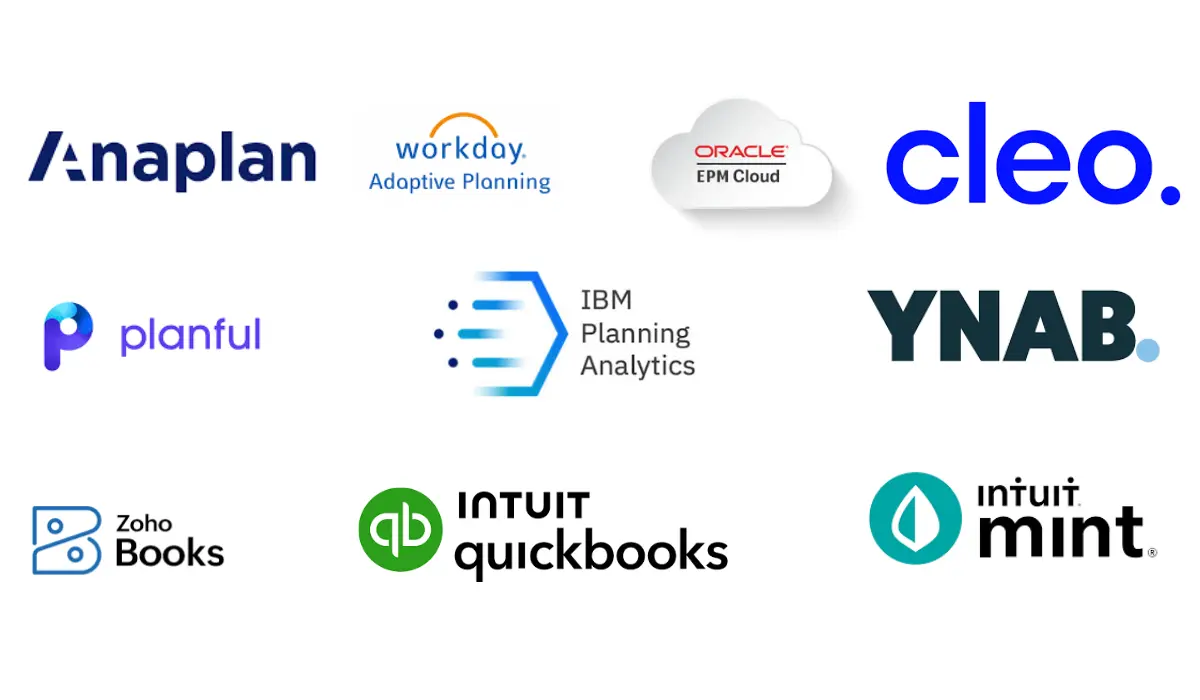
While AI itself is a technology, it becomes truly useful when applied through practical tools. Today, a wide range of software platforms use artificial intelligence to manage forecasting, budgeting, business analytics, and strategic planning. Some of the most impactful and widely used financial planning AI tools include:
1. Anaplan
Anaplan is known for its powerful AI-driven financial modeling. It allows organizations to simulate scenarios, evaluate business outcomes, and forecast performance across departments. Companies use it to connect planning with real-time operational data so decisions become faster and more aligned with business goals.
2. Workday Adaptive Planning
Workday Adaptive Planning provides automated budgeting and forecasting. It is popular among both medium and large enterprises because it streamlines planning cycles, automatically updates models with new information, and makes collaboration easier across finance teams.
3. Oracle Cloud EPM
Oracle offers an enterprise-level platform that combines predictive analytics, reporting, and financial consolidation. Organizations with complex financial structures rely on Oracle Cloud EPM for accurate forecasting, scenario testing, and risk management at scale.
4. Planful
Planful is widely used for continuous planning, budgeting, and reporting. It integrates directly with accounting systems, accelerates monthly close processes, and offers dashboards that give real-time visibility into performance. Finance leaders appreciate how quickly they can produce insights without manual spreadsheet work.
5. IBM Planning Analytics (Powered by TM1)
IBM Planning Analytics is known for handling large financial data sets. It uses AI to analyze profitability, forecast market shifts, and manage cash flow. Many organizations use it when they need deep analysis and high-speed performance.
6. QuickBooks Advanced and Zoho Books (AI for SMBs)
Small and mid-sized businesses often rely on QuickBooks Advanced and Zoho Books, which now incorporate AI for budgeting suggestions, anomaly detection, automated transaction categorization, and real-time cash flow monitoring. These tools make financial planning accessible even to non-experts.
7. Personal AI Budgeting Apps (Mint, YNAB, Cleo)
Individuals also benefit from AI financial planning through apps like Mint, You Need A Budget (YNAB), and Cleo. These platforms track spending, send alerts, recommend budgets, and help users meet savings goals with personalized insights.
How Do AI Financial Modeling Solutions Change Forecasting Accuracy?

Forecasting has always been one of the most demanding financial activities. Traditional models rely on fixed assumptions and static formulas. If any variable changes: fuel costs, customer demand, interest rates- the entire model must be updated. AI financial modeling makes this process dynamic.
AI builds models that improve as new data flows in. They run multiple simulations simultaneously, testing how decisions might affect future revenue, costs, or profitability. This helps businesses understand consequences before they finalize a plan.
Most companies today use AI modeling to answer questions like:
- What will happen to revenue if we enter a new market?
- How will profit change if our supplier increases the cost by 8%?
- What is the risk if customer churn rises by 3%?
AI does not replace experience. It supports decisions with evidence, making forecasts more realistic and resilient.
How Are AI Budgeting Tools Changing Daily Financial Control?

Budgeting is not a once-a-year activity anymore. Costs shift, priorities evolve, and goals can change within weeks. AI budgeting tools help organizations stay in control even when conditions fluctuate.
AI-driven budgeting enables finance teams to:
- Track spending continuously
- Compare budgets with actual usage
- Receive alerts when unusual patterns appear
- Optimize future budgets based on past results
For example, if one department begins overspending, AI sends a notification and suggests where adjustments can be made. If travel expenses are rising, a cap or alternative solutions are recommended. The purpose is not restriction but visibility; so decisions are informed rather than reactive.
Individuals also benefit. AI budgeting apps can analyze personal spending habits and identify areas for improvement, making financial discipline easier and more realistic.
How Do Financial Planning AI Tools Strengthen Strategic Thinking?

Perhaps the most valuable impact of AI is that it frees finance teams from repetitive work. Manual reporting, spreadsheet updates, and reconciliations take time. When AI handles these tasks, people can focus on strategy.
This improvement goes beyond efficiency. It changes how finance teams operate. Instead of looking backward, they can look forward. Meetings become about:
- Growth opportunities
- Risks and responses
- Market expansion
- Investment strategy
Financial planning becomes a business discussion, not just an accounting function. This shift is why companies are increasingly adopting AI; it elevates finance into a leadership role, supporting long-term vision and innovation.
How Does AI Increase Confidence in Decisions?

Confidence comes from clarity. When leaders see a clear picture of risk, cost, and opportunity, they make decisions faster and more decisively.
AI enhances confidence by providing:
- Accurate forecasts, updated continuously
- Explanations behind recommendations
- Visual dashboards that make trends obvious
- Scenario analysis that reveals possible outcomes
Instead of wondering whether a financial decision is right, leaders can see evidence. Even if uncertainty exists, they understand the risks involved and can prepare accordingly. This makes decision-making more intelligent, more accountable, and more aligned with business goals.
FAQs
- Are financial planning AI tools only for large companies?
No. Small businesses and even individuals use these tools for budgeting, forecasting, and financial control. Solutions are scalable based on needs. - Do I need technical skills to use AI financial planning tools?
Most platforms are designed with user-friendly dashboards. Finance teams only need basic familiarity with data interpretation, not programming. - Are forecasts from AI always accurate?
Forecasts are predictions, not certainties. However, AI improves accuracy by learning from continuous data and testing multiple scenarios, making results more reliable than static models. - How does Softude help organizations integrate AI into their financial planning tools?
Softude helps organizations integrate AI into financial planning tools by seamlessly connecting AI with existing systems, automating reporting, and delivering real-time dashboards for actionable insights, all without disrupting current processes.