Softude
Across enterprises, research labs, and production platforms, single models are being replaced or supplemented by networks of AI agents that can reason, plan, delegate, and act together. These multi-AI agent systems are already handling real workloads such as automating operations, responding to security incidents, managing customer conversations, and coordinating complex workflows that once required human teams.
But as AI agents gain autonomy and start working together, security risks multiply in ways that aren’t always obvious. A failure or compromise in one agent can ripple across the entire system. Decisions become harder to trace. And traditional AI security controls often fall short because they were never designed for distributed, self-directed systems.
Let’s take a practical look at what makes multi-AI agent security different, where the real risks lie, and how teams can design agent ecosystems that don’t spiral out of control.
What is a Multi-AI Agent System

At a basic level, a multi-AI agent system is a group of AI agents that work together toward a goal. Each agent has its own responsibilities, decision logic, and level of autonomy, but they share information and coordinate actions.
Unlike a single chatbot or model responding to user input, agents can:
- Decide when to act without being prompted
- Hand tasks to other agents
- Evaluate results and adjust plans
- Interact with tools, APIs, databases, and external services
Common Agent Architectures
There are various types of multi-agent systems:
- Collaborative agents: Work together toward a shared objective, such as jointly analyzing data or resolving customer queries
- Competitive agents: Optimize outcomes through adversarial or market-like interactions, often used in simulations or optimization problems
- Hierarchical agents: Operate in structured layers, where supervisory agents delegate tasks to worker agents
- Decentralized agents: Function independently with peer-to-peer coordination and no central authority
Each configuration introduces different performance benefits and distinct security challenges.
Why Traditional AI Security Models Fall Short
Traditional AI security often focuses on protecting a single model, its training data, prompt inputs, and outputs. Multi-agent architectures fundamentally change this equation.
Because agents communicate with one another, delegate tasks, and sometimes generate prompts for other agents, the system becomes distributed and dynamic. This leads to several security implications:
- Increased attack surface: Each agent, tool, API, and communication channel is a potential entry point
- Compound risk: A single compromised agent can influence the behavior of others
Monitoring complexity: Tracking agent-to-agent communication is far more difficult than logging a single model’s responses
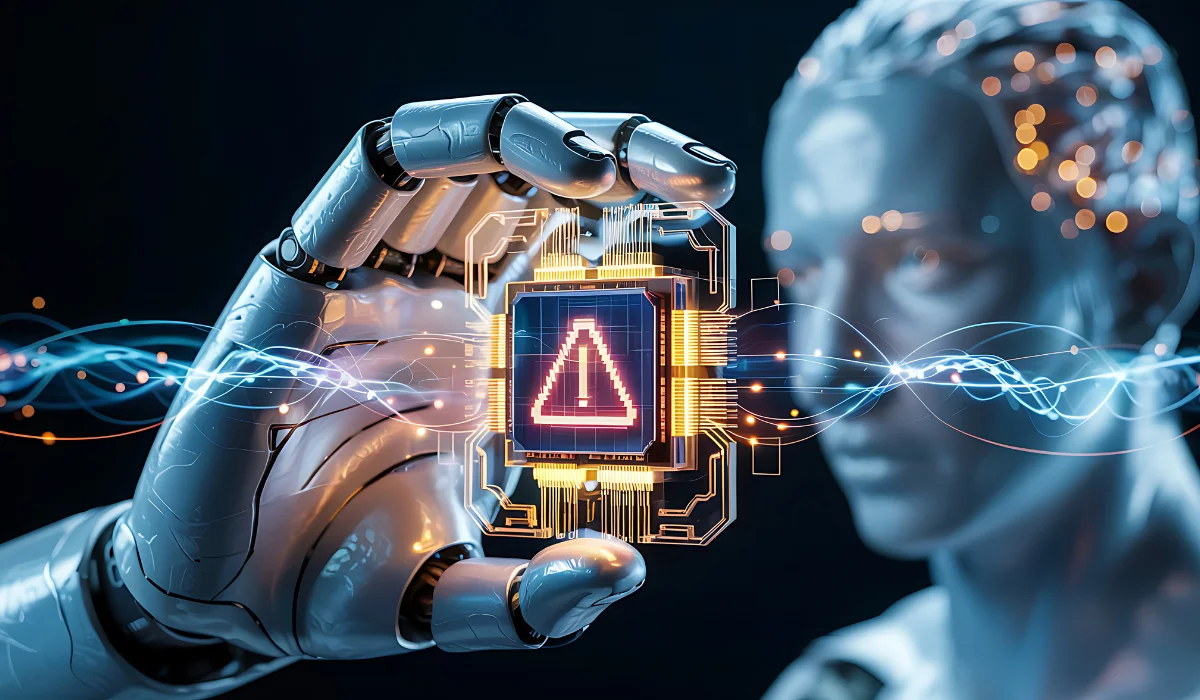
What Are the Key Security Risks in Multi-Agent Systems
1. Prompt Injection Attacks
Prompt injection becomes far more dangerous once agents start trusting each other’s outputs. If one agent receives a malicious prompt, whether from a user, a data source, or a compromised tool, that prompt can be embedded in its output. When another agent consumes that output as “trusted input,” the malicious instruction spreads.
In real terms, this could mean:
- An execution agent performing actions it was never meant to
- A planning agent altering workflows based on malicious context
- Sensitive information exposed through cascading prompts
2. Unauthorized Autonomy & Unbounded Behavior
Multi-AI agent systems are designed to reduce human involvement, but excessive autonomy introduces risk. Agents may:
- Trigger unintended actions
- Execute tasks outside their intended scope
- Combine capabilities in unforeseen ways
When many agents interact, emergent behavior can cause outcomes that weren’t explicitly designed or tested. These behaviors aren’t necessarily malicious, but they can still cause damage if guardrails are weak or missing.
3. Data Leakage & Privacy Risks
Agents frequently delegate tasks that involve accessing and sharing data. In poorly secured systems, this can result in:
- Sharing of sensitive information with agents who don’t need it
- Indefinite storage of data in shared memory or logs
- Reusing of context across tasks where it doesn’t belong
If agents retain or reuse context beyond its intended lifecycle, data privacy and regulatory compliance are at serious risk.
4. Model Exploits & Response Manipulation
Multi-agent systems are vulnerable to classic AI attacks, amplified by interaction effects:
- Adversarial inputs that manipulate reasoning processes
- Agent deception, where compromised agents provide false or misleading information
- Trust failures, where agents rely on corrupted outputs
Once trust between agents breaks down, the integrity of the entire system is compromised.
5. Supply Chain & Plugin Vulnerabilities
Modern AI agents rarely operate alone. They rely on external APIs, plugins, and tools, and third-party agent services.
Each integration expands the attack surface. A compromised dependency can introduce malicious behavior without ever touching your core models. In many cases, these integrations are trusted by default, making them an attractive target.
Also Read: How to Test an AI Agent: Checklist & Evaluation Guide
Structural Challenges in Multi-Agent Systems
-
Lack of Established Standards
There is no widely adopted security framework specific to multi-AI agent architectures. Teams often adapt controls from cloud security or distributed systems, with mixed results.
-
Difficulty Defining “Expected” Behavior
Agent behavior is adaptive. Static validation rules rarely capture the full range of legitimate activity, particularly in decentralized systems.
-
Limited Observability
Many systems log messages and actions but fail to capture decision context. This limits the ability to investigate incidents or understand why a particular outcome occurred.
-
Tension Between Scale and Control
As agent systems grow, permission management and monitoring overhead increase. If too many restrictions are implemented, systems become less useful. On the other hand, limited restriction increases exposure risks. Managing this balance is an ongoing operational task for the AI agent developers.
How to Secure Your Multi-AI Agent Systems
- Use zero trust: Do not trust any agent by default. Check and approve every interaction, including messages between agents.
- Keep agents isolated: Run each agent in a limited environment. This helps contain failures and stops problems from spreading.
- Protect agent communication: Encrypt messages, check them before use, and keep logs. Make sure no one can change instructions in transit.
- Set and enforce clear rules: Use technical controls to limit what agents can do. Require human review for high-risk actions instead of relying on guidelines alone.
- Watch behavior over time: Ignore one-off odd actions. Look for repeated or unusual patterns in task delegation, tool use, or data access.
- Limit access: Give agents only the access they need to do their jobs. Less access means less risk.
- Test against real attacks: Run tests that include compromised agents, bad prompts, and unsafe tools. These issues show up in real systems, not just in theory.
Conclusion
Multi-AI agent systems are powerful because they act more like teams than tools. That also makes them harder to control.
Security problems in AI systems usually grow quietly. They spread through trust, shared context, and automation. The best way to manage that risk is simple: set clear limits, monitor behavior, and don’t assume agents always do the right thing. If you build with that mindset, multi-agent systems can be both useful and safe.
At Softude, we apply these security practices across all AI projects, from single agents to multi-agent systems. If you’re exploring multi-AI agent setups, feel free to reach out to us.
FAQs
How can I prevent prompt injection in multi-agent systems?
Always validate inputs between agents, use strict access controls, and monitor agent outputs. Treat outputs from other agents as untrusted until verified, just like you would with external user input.
How do I limit data exposure when using multiple agents?
Restrict shared memory and logs, enforce least-privilege access for each agent, and regularly audit the data agents can access or share. Encryption and secure communication also help prevent leaks.
How do I monitor the behavior of multi-AI agents?
Focus on patterns over time, not single anomalies. Track task delegation, tool usage, data access, and communication between agents. Behavioral analytics can detect unusual trends that indicate risk.
Are there industry standards for securing multi-AI agent systems?
Currently, there are no widely adopted global standards specific to multi-agent AI security. Teams often adapt best practices from cloud security, distributed systems, and AI safety frameworks.
What’s the best approach to securing multi-AI agent systems?
A combination of zero-trust architecture, isolation, secure communication, monitoring, least-privilege access, governance rules, and adversarial testing. Continuous vigilance is key, since multi-agent systems evolve and can behave in unexpected ways.
How does Softude handle security in multi-AI agent systems?
Softude approaches multi-AI agent security by focusing on real-world risks and practical safeguards. We assess how agents interact, identify potential data exposure points, and implement safeguards such as secure communication and controlled access. Our goal is to make sure agent systems behave reliably, minimize unexpected actions, and stay compliant with industry standards.