Softude
AI agents communicate with each other by exchanging structured messages that carry tasks, context, instructions, data, and results through defined communication interfaces or protocols. One agent can identify a capability it needs, send a request to another agent, receive the result, and use it to continue the larger workflow.
That sounds simple until you connect AI agents built with different frameworks, models, or applications.
Key Highlights
- AI agents communicate by exchanging structured requests, context, instructions, and results.
- Agent-to-agent communication typically follows a cycle of discovery, delegation, execution, response, and follow-up.
- Two AI agents can communicate through APIs, messaging systems, event-driven architectures, orchestration layers, or specialised agent protocols.
- Protocols provide common rules for discovering capabilities, exchanging information, and coordinating tasks.
- AI agent interoperability allows agents built with different models, frameworks, or platforms to collaborate.
- A multi-agent interoperability protocol can provide standardised rules for communication as the number of agents grows.
What Is AI Agent Interoperability?
AI agent interoperability is the ability of AI agents built with different models, frameworks, or platforms to communicate and collaborate through compatible mechanisms.
It allows agents to discover capabilities, exchange information, delegate tasks, and share results without requiring a separate custom connection for every agent. This becomes increasingly important as organisations build larger multi-agent systems.
How Do AI Agents Communicate With Each Other?

At a basic level, AI agent communication is a structured exchange between a requesting agent and a receiving agent.
For example, imagine a customer-service agent handling a product query. It knows how to understand the customer’s question but does not have access to current inventory. Instead of trying to answer from its own knowledge, it can ask an inventory agent for the information.
The interaction might look like:
Customer-service agent → inventory request → inventory agent → availability result → customer-service agent
A more complex interaction follows several stages.
1. An Agent Identifies a Task
The first agent determines that it needs a capability, piece of information, or action that another agent can provide.
2. It Finds or Selects Another Agent
The requesting agent may already know the appropriate agent, or it may need to discover one based on its capabilities.
3. It Sends a Request
The request typically includes the task, relevant context, required inputs, constraints, and expected output.
4. The Receiving Agent Processes the Request
The second agent interprets the request and may reason, retrieve information, use tools, access an enterprise system, or delegate part of the task.
5. It Returns a Response
The response might be a completed result, structured data, a status update, an error, or a request for additional information.
6. The First Agent Continues the Workflow
The result becomes an input for the next step. The first agent might respond to the user, request another capability, or pass the result to a third agent.
This is the basic pattern behind agent-to-agent communication. The important distinction is that agents are not merely passing text back and forth. They are coordinating work.
What Do AI Agents Actually Exchange?
For agents to communicate effectively, they need to exchange more than a question and an answer.
Depending on the system, an interaction can contain:
- Tasks: What the receiving agent needs to accomplish
- Context: Information required to understand the task
- Instructions: Constraints or requirements for completing it
- Data: Documents, records, or structured inputs
- Capabilities: Information about what an agent can do
- Results: The output of a completed task
- Status: Progress, completion, or pending states
- Errors: Information about failed or incomplete operations
- Metadata: Information such as identity, priority, or permissions
How to Make Two AI Agents Talk to Each Other
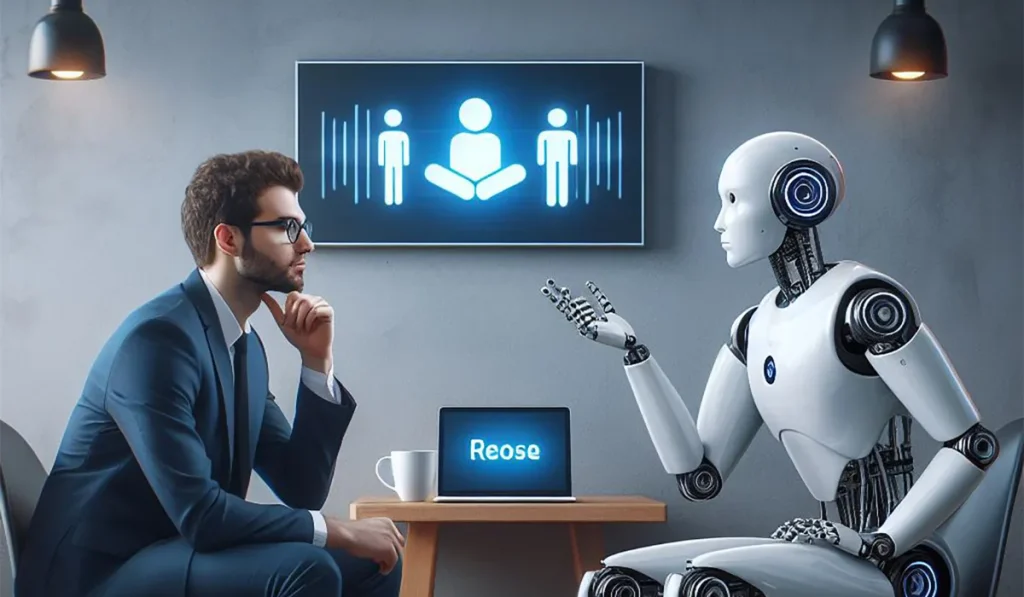
If you have already built multi-AI agents, making them communicate requires more than pointing one agent at the other. You need to define what each agent does, how they exchange information, and what happens when an interaction succeeds or fails.
A practical implementation typically follows these steps.
Step 1: Define Each Agent’s Role
Start by establishing a clear division of responsibility. For example:
- Research agent: finds and summarises information
- Analysis agent: evaluates the research and produces insights
The research agent should know what the analysis agent expects as input, while the analysis agent should define what it will return.
Clear boundaries reduce unnecessary communication and make failures easier to diagnose.
Step 2: Define the Communication Contract
The two agents need an agreed structure for requests and responses.
For example:
task: analyse_market_report
input: report_2026_Q3
requirements: identify_revenue_growth_and_risks
output: structured_analysis
The receiving agent then knows what it is being asked to do, what information it has received, and what type of response is expected.
Step 3: Give Them a Communication Mechanism
The agents need a way to send and receive these messages. Depending on the AI agent architecture, that could be a direct API, a message queue, an event system, an orchestration layer, or an agent protocol.
The simplest architecture may look like:
Agent A → API/interface → Agent B
For a larger system, the communication layer may also handle discovery, authentication, routing, state, and asynchronous tasks.
Step 4: Establish Addressing or Discovery
Agent A needs to know where to find Agent B. For two known agents, this can be as simple as a configured endpoint.
In a larger system, however, hard-coding every agent’s location becomes difficult. Agents may instead advertise their capabilities so that another agent can discover the appropriate service dynamically.
Step 5: Control Access
Communication should not automatically give an agent unrestricted access to another agent’s tools or data.
Define which agents can communicate, what they can request, and which actions or systems they are authorised to access.
Step 6: Define Response and Failure Handling
The communication contract should also cover what happens when:
- An agent is unavailable
- A request times out
- The input is invalid
- The result is incomplete
- An agent cannot perform the requested task
This prevents a single failed interaction from silently breaking the entire workflow.
Step 7: Test the Interaction
Test more than the ideal request-response path. Try incomplete context, invalid requests, unavailable agents, unexpected outputs, and repeated requests.
That is often where the weaknesses in an AI agent communication architecture become visible.
Also Read: The Role of APIs in Scaling Agentic AI Across Platforms
What Are Agent Protocols and How Do They Enable Communication?
Once agents need to communicate beyond a simple custom connection, protocols become important.
Agent protocols define common rules for how agents discover capabilities, exchange messages, delegate tasks, return results, and manage interactions.
A protocol can establish conventions around:
- Agent identity
- Capability discovery
- Message structure
- Task delegation
- Context exchange
- Responses and task states
- Authentication
- Authorisation
- Error handling
A multi-agent interoperability protocol applies these kinds of rules to interactions involving multiple agents, helping them communicate through a more consistent structure.
This reduces the need to create a completely different communication mechanism every time another agent is added.
What Methods Can AI Agents Use to Communicate?
There is no single communication method that fits every multi-agent system. The right approach depends on whether agents need synchronous or asynchronous interactions, whether they are known in advance, and how much autonomy the system requires.
- Direct API-Based Communication
One agent sends a request directly to another agent’s endpoint. This is often the simplest approach when two known agents have predictable interactions.
Example:
Agent A → HTTP request → Agent B → HTTP response → Agent A
Applying this method to AI agent communication is simple, but managing a growing network of custom point-to-point integrations can be difficult.
- Message-Based Communication
Instead of calling another agent directly, an agent places a message into a queue or messaging system. The receiving agent processes the message when it is available.
This works well for asynchronous workflows where the requesting agent does not need an immediate response.
It also decouples the agents: the sender does not necessarily need to know when or how the receiver processes the request.
- Event-Driven Communication
An agent can publish an event that other agents subscribe to.
For example:
Order created → inventory agent reacts → fulfilment agent reacts → notification agent reacts
This approach is useful when multiple agents need to respond to changes in the same business process.
- Orchestrated Communication
A central orchestrator can control which agent performs each task and determine the sequence of interactions.
For example:
Orchestrator → research agent → analysis agent → compliance agent → reporting agent
Orchestration provides greater control over AI agents and can make complex workflows easier to monitor.
- Decentralised Agent Communication
Agents can also communicate more dynamically, selecting capabilities based on what is needed at runtime rather than following one fixed sequence.
This method is more suitable for autonomous agent systems where agents need to collaborate with other agents frequently.
The trade-off is greater architectural complexity: discovery, permissions, context, routing, and failure handling become more important.
Which AI Agent Communication Method or Protocol Should You Choose?
There is no universal “best” approach. Start with the communication requirements rather than choosing a protocol because it is popular.
| Requirement | Approach to consider |
| Two known agents with simple requests | Direct API/interface |
| Long-running or asynchronous tasks | Message-based communication |
| Multiple agents reacting to events | Event-driven architecture |
| Predictable multi-step workflow | Central orchestration |
| Dynamic capability discovery | Agent-oriented protocol |
| Agents built on different platforms | Interoperability-focused protocol |
| Highly autonomous collaboration | Dynamic agent-to-agent communication |
Then evaluate the architecture against a few practical questions:
Do agents need an immediate response?
If yes, synchronous communication may be appropriate. If tasks can run independently, asynchronous messaging may be better.
Do agents already know each other?
If there are only a few fixed agents, explicit endpoints may be sufficient. If agents need to discover capabilities dynamically, a discovery mechanism becomes more valuable.
Will agents come from different systems?
If you expect multiple vendors, frameworks, or technology stacks, AI agent interoperability should influence your protocol choice from the beginning.
How complex is the workflow?
A simple two-agent interaction does not necessarily need a sophisticated multi-agent interoperability protocol. A large autonomous agent system may.
What happens when communication fails?
Consider retries, timeouts, partial results, validation, and recovery before selecting the architecture.
What Are the Challenges of AI Agent Interoperability?
Even when two agents can technically exchange messages, the workflow can still fail.
1. The Agents Can Connect but Cannot Understand Each Other
Usually, the problem is not connectivity. It is an incompatible schema, ambiguous request, or missing context.
2. The Receiving Agent Performs the Wrong Task
The request may not define the objective, constraints, or expected output clearly enough.
3. The Agents Repeatedly Time Out
The communication pattern may be poorly suited to long-running work. An asynchronous or task-based approach may be more appropriate than waiting for a synchronous response.
4. An Agent Cannot Find the Capability It Needs
The system may lack a discovery mechanism or have incomplete capability descriptions.
5. Adding Another Agent Requires a New Custom Integration
This is a common sign that the architecture is tightly coupled. Shared communication standards or protocols can reduce this dependency.
6. Different Agents Return Conflicting Results
The system needs a way to validate, prioritise, reconcile, or escalate conflicting outputs rather than blindly passing every response to the next agent.
7. Agents Have More Access Than They Need
AI agent communication should be governed by authentication and authorisation. An agent being able to contact another agent does not mean it should be allowed to perform every action that agent exposes.
Also Read: Best Practices to Secure Multi-AI Agent Systems
How to Solve Common AI Agent Communication Challenges
- Standardise message structures so every agent knows how to interpret requests, context, inputs, and responses.
- Define clear agent capabilities to improve discovery and prevent tasks being routed to unsuitable agents.
- Use asynchronous communication for long-running tasks that do not require an immediate response.
- Adopt a multi-agent interoperability protocol when multiple agents or communication paths make custom integrations difficult to maintain.
- Introduce validation and conflict-resolution rules before one agent acts on another agent’s output.
- Apply authentication and authorisation to control which agents can communicate and what they can access.
- Use monitoring and logging to trace communication failures across multi-agent workflows.
- Choose the communication architecture based on the workflow rather than adding unnecessary protocol or orchestration layers.
Conclusion
Making AI agents communicate is less about getting two systems to exchange messages and more about giving them a shared way to discover, understand, and act on each other’s capabilities.
If you’re building a multi-agent system, choosing the right communication method and protocol early can make it easier to scale from two connected agents to a broader, interoperable AI architecture.
Frequently Asked Questions
They may not be able to communicate directly. A compatible interface, adapter, translation layer, or shared protocol may be needed to bridge the two communication mechanisms.
No. Agents can use different underlying models as long as their communication interfaces and exchanged information are compatible.
Yes. An AI agent can communicate with APIs, databases, applications, enterprise systems, and other software through appropriate interfaces. These systems can provide information or actions that the agent uses within a larger workflow.
No. A small system involving two known agents may work effectively with direct APIs or other simple interfaces. Protocols become more valuable as systems require dynamic discovery, interoperability, or communication among many agents.