Softude
In the fast-paced business world of 2026, “efficiency” has a new definition. It’s no longer enough to have a digital version of a paper process. Today’s market leaders are moving toward autonomous operations, where AI doesn’t just assist humans but actively manages, executes, and optimizes end-to-end workflows.
Enterprise process automation has shifted from simple, rule-based tasks to complex, cognitive decision-making. From autonomous agents to AI-enhanced workflows, enterprises are transforming operations faster than ever. If your organization is still relying on the rigid automation of the past decade, you’re not just behind, you’re invisible.
Why Enterprises Are Embracing AI for Business Process Automation

In 2026, AI-driven automation is no longer optional; it’s a strategic imperative. Enterprises are leveraging AI for four key reasons:
- Handling Complexity and Unstructured Data
Traditional automation struggles with emails, PDFs, scanned documents, and other unstructured inputs. AI systems can interpret and act on this data, enabling automation of workflows that were previously considered too complex for machines. - From Reactive to Predictive Operations
Unlike rigid automation, AI monitors data in real time and anticipates needs. For example, a supply chain AI agent can detect potential shortages from global signals and automatically trigger restocking, often before human teams notice any issue. - Elasticity and Scalability
AI digital workers can scale instantly to handle seasonal spikes or sudden surges in workload, then scale back when demand drops. This flexibility reduces staffing costs while maintaining operational efficiency. - Strategic Augmentation, Not Replacement
By automating repetitive tasks, AI frees employees to focus on higher-value roles such as strategic planning, innovation, and oversight. This not only improves productivity but also boosts employee satisfaction and reduces burnout.
The Strategic Benefits of AI Tools for Enterprise Automation
Why are global enterprises investing billions into these tools in 2026? The ROI has become undeniable across five key pillars:
- Hyper-Speed Execution: Tasks that previously took human teams hours, such as reconciling thousands of multi-currency invoices, are now completed in seconds with 99.9% accuracy.
- Workforce Optimization: Rather than replacing humans, AI automation tools handle the “drudge work,” allowing your most expensive talent to focus on high-level strategy and creative problem-solving.
- Adaptive Compliance: As regulations shift worldwide, AI-driven automation adapts instantly, ensuring every action stays compliant and leaving a full “Chain of Work” record for audit and accountability.
- Seamless Scalability: AI doesn’t need to be “hired” or “onboarded.” When your workload triples during peak seasons, your digital workers scale instantly without a dip in performance.
- Autonomous Decisioning: These business automation tools can analyze cross-departmental data to provide predictive insights, such as identifying a supply chain bottleneck three weeks before it impacts production.
Top AI Tools for Business Process Automation
The market has matured into four distinct categories. Here is a deep description of the leading tools to help you compare and select the right fit for your organization.
A. AI Agents & Digital Workers
- Maisa AI: The Accountable Digital Worker
Built on a unique Knowledge Processing Unit (KPU) architecture, Maisa moves beyond the “probabilistic” nature of standard LLMs. It uses a “Chain-of-Work” protocol that validates every reasoning step against your company’s private data.
Key Advantage: It is the only platform that provides a “verifiable audit trail” for every decision.
Best For: High-stakes, regulated industries (Finance, Healthcare, Legal) where “hallucinations” are a dealbreaker. It specializes in processing complex, unstructured documents like medical records or legal contracts.
- Salesforce Agentforce 2.0: The CRM Powerhouse
Powered by the Atlas Reasoning Engine, these agents don’t just chat; they execute. They have deep access to the Salesforce Data Cloud, allowing them to understand the full context of a customer journey.
Key Advantage: Native integration. If your data lives in Salesforce, these agents can update records, route leads, and trigger Slack notifications without any external API configuration.
Best For: Sales, Marketing, and Customer Service teams that want to automate the “administrative burden” of CRM management.
B. Enterprise Cloud AI Platforms
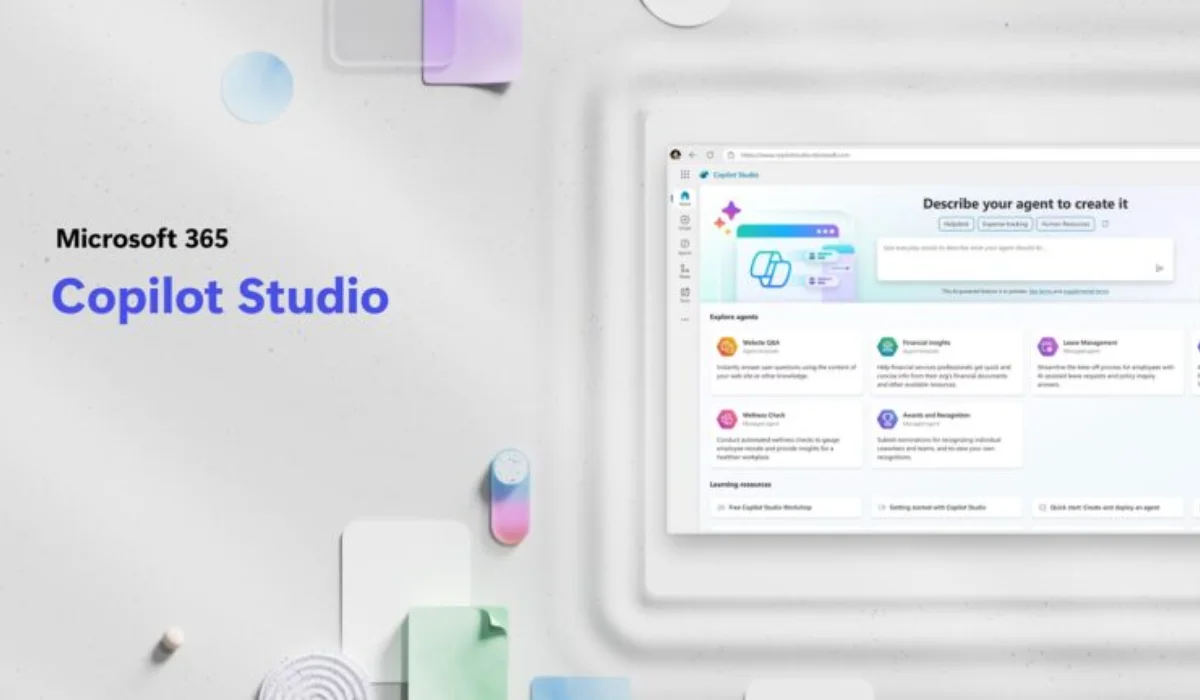
- Microsoft Copilot Studio: The Ecosystem Standard
A low-code builder that sits atop the Power Platform and Azure AI. It allows you to build “Copilots” that are deeply integrated with Microsoft 365 apps (Teams, Outlook, Excel).
Key Advantage: Governance. It leverages your existing Microsoft Entra ID (Active Directory) for security, ensuring agents access only the data the user is authorized to see.
Best For: Standardizing AI across a global workforce already using Microsoft 365.
- AWS Bedrock AgentCore: The Developer’s Choice
A serverless framework that gives you a “Model Marketplace.” You can swap between Anthropic Claude, Meta Llama, or Amazon Titan models with a single API call.
Key Advantage: Flexibility and Scale. It is designed for engineers who want to build modular agents that link to S3 buckets, Lambda functions, and internal databases.
Best For: Tech-heavy enterprises building custom, proprietary AI products or internal tools that require high customizability.
- Google Cloud Vertex AI Agent Builder: The Data Leader
Deeply integrated with BigQuery and Google’s Search technologies. It excels at Multimodal RAG (Retrieval-Augmented Generation), meaning it can “read” videos, images, and text simultaneously to find answers.
Key Advantage: Search capabilities. It is the most powerful tool for “finding a needle in a haystack” across petabytes of enterprise data.
Best For: Complex Logistics and Manufacturing companies that need to synthesize data from sensors, manuals, and global supply chain feeds.
C. Advanced RPA Platforms

- Leader
UiPath has integrated its AI Center directly with its desktop and cloud robots. It uses “Computer Vision” to navigate legacy apps that don’t have APIs, while the AI decides what to do next.
Key Advantage: Ecosystem breadth. With a massive community and prebuilt connectors for ERPs such as SAP and Oracle, it iUiPath: The Agentic RPA s the most mature platform for complex “hybrid” environments.
Best For: Large enterprises with significant “technical debt” (legacy systems) that need to modernize their systems using AI.
- Automation Anywhere: Cloud-First Simplicity
A fully cloud-native platform (Automation 360) that emphasizes user-friendliness. Their IQ Bot uses machine learning to convert unstructured documents into structured data for the bot to process.
Key Advantage: Fast time-to-value. It is generally easier to set up for non-technical users compared to the more developer-centric UiPath.
Best For: Mid-market to large enterprises looking for a quick, cloud-native entry into document-heavy automation (Invoicing, HR forms).
D. Integration & Orchestration Tools
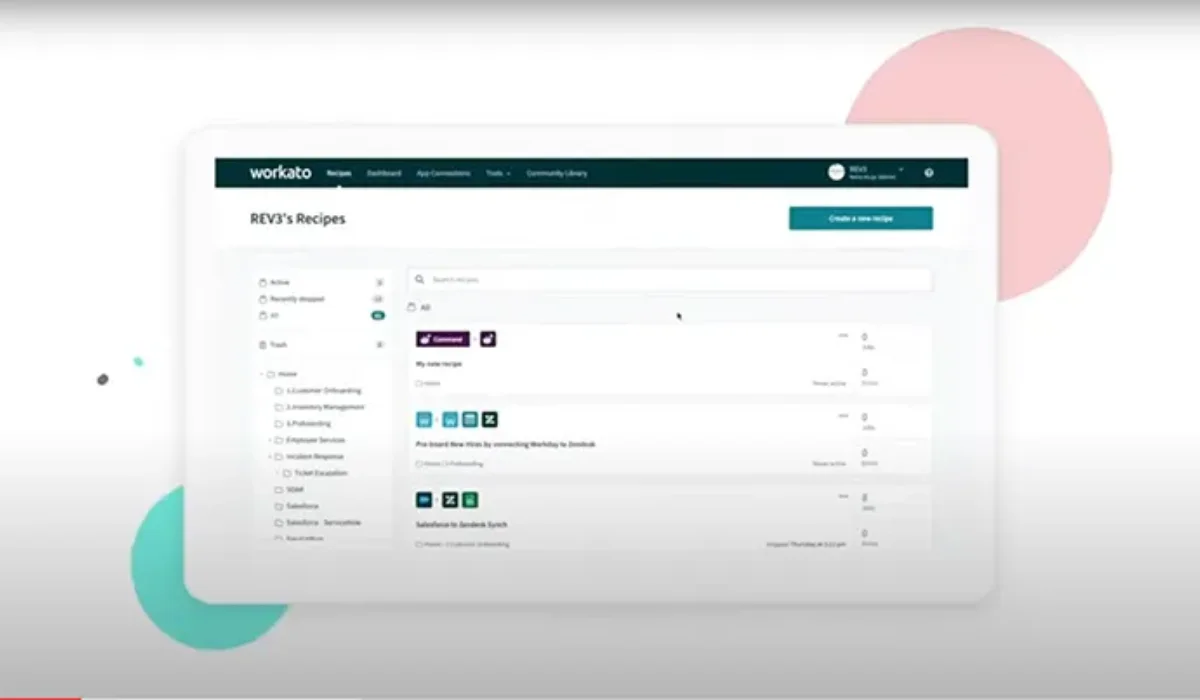
- Workato: Enterprise Logic & Security
A “ZeroOps” architecture that handles the scaling for you. It uses Recipe Copilot (AI) to help users write the logic that connects more than 1,000 enterprise apps.
Key Advantage: Security-first. It offers tenant-level isolation and built-in error handling that prevents data loss if an API fails.
Best For: IT teams that need to coordinate high-volume data movement between SaaS platforms (e.g., syncing NetSuite with Salesforce and Snowflake).
- n8n: The Open-Source Disruptor
A “fair-code” node-based editor. It is unique because it allows a “JavaScript fallback,” meaning developers can write custom code directly in the automation if the visual builder isn’t sufficient.
Key Advantage: Data Sovereignty. Because you can self-host n8n, your data never has to leave your own servers, a critical requirement for some security teams.
Best For: Engineering teams and startups that want maximum control and lower licensing costs.
Challenges & Considerations
- Legacy Integration: Most enterprises still sit on “technical debt”, 20-year-old databases that weren’t built for AI. Bridging this gap requires a hybrid approach.
- The Trust Gap: Success depends on Explainable AI (XAI), tools like Maisa that show their work rather than acting as a “black box.”
- Change Management: Adopting AI is 20% technology and 80% culture. Organizations must invest in upskilling their workforce to become “AI Orchestrators.”
- Data Privacy: With the rise of “Shadow AI,” IT departments must enforce strict governance to prevent sensitive data from leaking into public LLMs.
Conclusion
In 2026, AI tools for enterprise process automation are no longer optional; they are the new baseline for operational excellence. The transition from “assisted” to “autonomous” is happening now.
To remain competitive, enterprises must adopt these tools strategically: start by identifying your most data-heavy, exception-prone workflows, deploy a pilot agent, and scale based on measurable “hours recovered.”